Ukrainian steel pipe and railway product producer Interpipe has claimed that a statistical error led to the EU allocating an annual seamless pipe quota for Ukraine that is at least 30 percent lower than it should be under the EU’s new steel trade mechanism.
Ukraine has been allocated a total annual steel tariff-rate quota of 1,049,960 mt across nine product categories under the new EU steel trade measure.
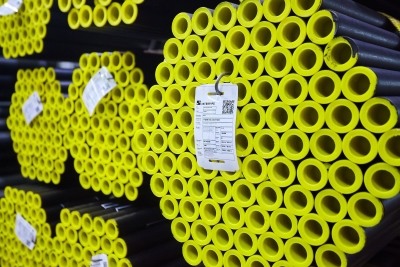
For the seamless pipes category, Ukraine received an annual quota of 80,670 mt. Interpipe argues that this allocation is based on incorrect statistical data, stating that a significant share of Ukraine's exports to the EU during the 2022-2024 reference period was not fully reflected in the data used to calculate the quota. The company said that, as a result, the seamless pipe quota allocated to Ukraine is at least 30 percent lower than it would have been if the correct data had been used.
Company also questions implementation of preferential treatment
In addition to the statistical issue, Interpipe said the implementing regulation does not fully reflect the preferential treatment for Ukraine provided for in the regulation adopted by the European Parliament on May 19, 2026.
According to the company, Ukraine was treated in the most-favored-nation quota calculations in the same way as major global steel exporters, including countries with documented excess non-market steelmaking capacity.
Interpipe also argued that Ukraine was subject to the same methodology as other EU free trade agreement partners without the differentiation envisaged in the regulation.
CEO calls for correction
Luca Zanotti, Interpipe CEO, described the current EU steel quotas as a serious setback for Ukraine and its steel industry, which continues to operate in regions close to the front line during the ongoing war. Zanotti said the objective of the EU's new steel safeguard framework is to address global non-market steel overcapacity and argued that Ukraine is not part of that problem.
He called on the European Commission to correct the data used for Ukraine's seamless pipe quota by the end of the third quarter of 2026, describing it as the only fair way to remedy the error.
The European Commission has not yet responded publicly to Interpipe's claims regarding the statistical calculations or the company's request for a quota revision.