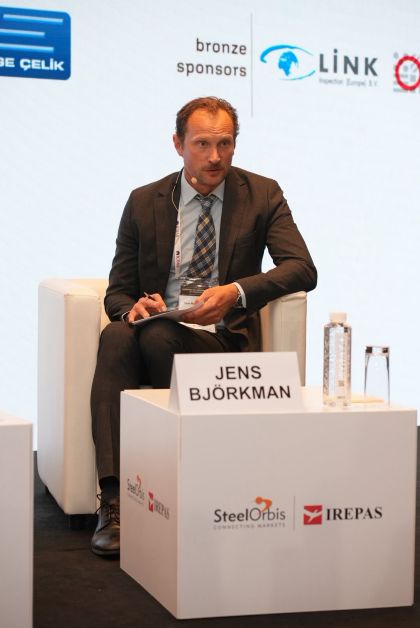
On the last day of the SteelOrbis 2026 Autumn Conference & 95th IREPAS Meeting, held in Belgrade on September 27-29, Jens Björkman from Stena Metal International and chairman of the raw material suppliers committee shared the committee's assessments of current dynamics and difficulties in global raw material markets during a panel session.
Mr. Björkman stated that higher freight, energy and financing costs, together with potential restrictions on scrap exports, are putting pressure on the steelmaking raw material trade. Presenting the findings of the IREPAS raw material suppliers committee, Björkman said coking coal prices had risen by around 60 percent within a few months. He also pointed to strong raw material demand in the US during the first part of 2026 and growth in India. In Europe, in contrast, high energy costs have added to the challenges facing the industry, he stated.
Low Rhine water levels disrupt European scrap and steel movements
Björkman said the low water levels of the River Rhine, comparable to those seen in 2018, have disrupted movements of scrap and steel in Europe. Some material has remained in inventories instead of reaching its destinations, causing business to be postponed. He described European steel capacity utilization of around 65 percent as unsustainable.
Regarding coking coal, Björkman said the summer price surge was driven particularly by conditions in China and had also lifted Australian prices. Chinese demand has since eased somewhat, he said. Although he cited an increase of around six percent in Indian production this year, he does not expect it to offset weaker Chinese demand. Björkman therefore sees a slightly negative outlook for coking coal prices in the coming months and said the earlier surge may prove temporary in the short term.
Trade disruptions affect scrap purchases in India and Pakistan
Turning to import scrap markets in India and Pakistan, Björkman said disruptions to trade flows have had a substantial effect on purchasing. Buyers who previously could purchase smaller quantities with shorter lead times have had to consider larger volumes and longer delivery periods. Higher freight and financing costs make those changes more difficult, he explained. He added that demand for European material has increased.
The chairman of the raw material suppliers committee expressed concern about proposed changes affecting EU shipments of ferrous and non-ferrous material to non-OECD countries. North Africa and South Asia are significant and consistent buyers of European material, he said. In his view, restrictions could affect both their ability to purchase scrap from the EU and recycling activity within Europe.
Financing raw material trade has also become more difficult throughout the supply chain, according to Björkman. Higher interest rates, freight costs and raw material prices are encouraging companies to keep lead times short, buy according to immediate requirements and avoid accumulating large inventories.
Scrap to remain principal raw material for EAF-based producers
On the future raw material mix for electric arc furnace-based producers, Björkman said scrap will remain the principal input. HBI and DRI can supplement scrap, but he does not expect them to replace it. Their cost is a constraint in many regions, while energy availability influences where they can be produced. Björkman also questioned whether Europe could depend on supplies from the GCC given regional and political uncertainties.
Trade barriers seen as key risk for scrap market in 2027
Björkman said Europe has sufficient scrap for its own steelmakers and has opposed adding further restrictions and administrative requirements to its export trade.
Asked about the risks facing the market in 2027, he identified increasing trade barriers as a particular concern for scrap suppliers. Björkman expects trade to become more regional, with European exporters facing additional requirements.