Ukrainian steel pipe and railway product producer Interpipe has announced that it has proposed a pilot project to establish an Industrial Acceleration Zone linking the Romanian and Ukrainian metals sectors, arguing that Ukraine should already be regarded as an active contributor to European industry rather than solely a future participant.
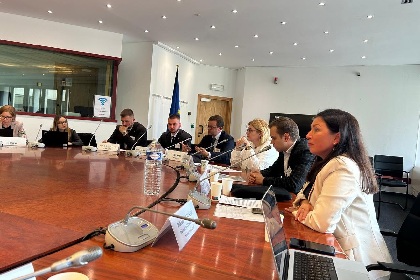
The proposal was presented by Nataliya Sydoruk, government relations director at Interpipe, during a roundtable discussion held as part of the ninth meeting of the Ukraine-EU High-Level Dialogue on Horizontal Issues and Individual Industry Sectors in Brussels on June 8, 2026.
Company highlights alignment with EU standards
According to Sydoruk, Ukrainian businesses are already helping the EU achieve its objectives related to competitiveness, sustainability and decarbonization. She highlighted Interpipe’s investments in environmental and industrial standards aligned with EU requirements, noting that the company has significantly reduced its carbon emissions and now reports greenhouse gas emission levels that meet the European Green Deal’s 2030 targets.
The initiative comes after Interpipe expanded its presence in the European Union through the acquisition of a pipe plant in Romania. The transaction was completed on April 1, 2026, and the facility was officially renamed Interpipe Roman SA in May.
According to Sydoruk, the company is closely monitoring the implementation of the EU Industrial Accelerator Act and the development of Industrial Acceleration Zones.
Focus on industrial cooperation and investment
Sydoruk suggested that the EU should consider strengthening industrial cooperation with Ukraine by linking industrial zones on both sides of the border, with a pilot initiative based on existing ties between the Romanian and Ukrainian steel industries. Potential areas of cooperation include the creation of cross-border industrial clusters, coordinated infrastructure development and joint investment projects aimed at enhancing competitiveness in both the EU and Ukraine.
She emphasized that Ukraine’s integration into the European industrial space should be viewed as a strategic interest for both Kyiv and Brussels. According to Sydoruk, Ukraine should not be seen solely through the lens of reconstruction assistance, as deeper industrial integration today would create greater opportunities for both Ukrainian and European businesses in the future.