Russian steelmaker Severstal has announced that it has decommissioned rolling mill 150 at its Cherepovets Iron and Steel Works (CherMK), one of the company’s key assets, after the unit’s capacity was replaced by the newly commissioned rolling mill 170.
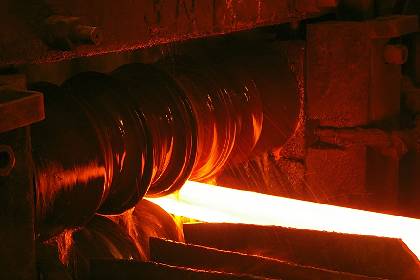
Commissioned in 1966, rolling mill 150 produced more than 38 million mt of wire rod during nearly 60 years of operation, while in 2025 the unit produced 397,000 mt of rolled products, with Severstal maintaining its overall rolled product output by redistributing order flow among other units following the shutdown.
According to the company, rolling mill 170, launch project of which was one of the key developments in Russian metallurgy in 2025, is expected to reach an annual capacity of 900,000 mt of rolled products after the commissioning of its second production line, and has already mastered the production of coiled wire rod, round sections and rebar, enabling it to meet the product range, surface quality and metal microstructure requirements of its key processor Severstal-Metiz.
Evgeny Vinogradov, general director of Severstal’s Russian Steel and Resources Assets Division, stated that rolling mill 150 had been a significant part of the company’s history, supplying customers with high-quality metal for 60 years and serving as a training ground for generations of metallurgists, while the launch of rolling mill 170 creates an end-to-end process chain for the production of high-quality rolled metal for customers in the construction, mechanical engineering, energy and mining sectors and ensures higher production efficiency, which is crucial under current market conditions.
Severstal also stated that 109 employees who had previously serviced rolling mill 150 have been transferred to the new rolling mill 170 and other CherMK divisions, while hot commissioning works are currently underway at rolling mill 170 for the second Stelmar line, Garrett line equipment and two straightening and cutting lines.