Global mining group Rio Tinto has announced that its global iron ore sales increased by 3 percent year on year and 2 percent quarter on quarter to 90.8 million mt in the third quarter of 2026, supported by higher Pilbara shipments and the continued ramp-up of its Simandou operation in Guinea.
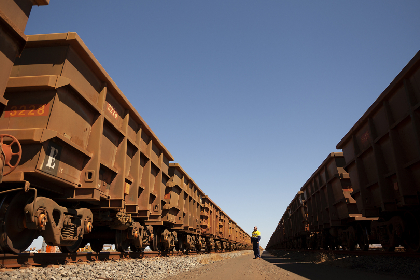
Global iron ore production totaled 89.7 million mt, up by 2 percent year on year and 3 percent from the previous quarter. In the January-September period, production increased by 4 percent to 259.6 million mt, while sales rose by 3 percent to 255.3 million mt.
Pilbara shipments increase despite slightly lower production
Rio Tinto's Pilbara operations in Western Australia shipped 85.7 million mt of iron ore in the third quarter, up by 2 percent year on year and broadly unchanged quarter on quarter, supported by strong mine performance and healthy port inventories. Production amounted to 83.4 million mt, down by 1 percent year on year and broadly stable compared with the second quarter.
In the first nine months, Pilbara production increased by 3 percent to 245.7 million mt, while shipments rose by 4 percent to 243.3 million mt.
Meanwhile, Rio Tinto's portside iron ore sales in China totaled 4.7 million mt in the third quarter, compared with 4.9 million mt a year earlier. Approximately 71 percent of these volumes were screened or blended at Chinese ports, while portside inventories stood at 3.7 million mt at the end of September.
Simandou reaches annualized production rate of 10 million mt
The SimFer operation at Simandou achieved an annualized production rate of approximately 10 million mt during the third quarter and remains on track to reach a production rate of 60 million mt per year in the second half of 2028.
Quarterly production reached 2.5 million mt, up by 273 percent from the second quarter, while shipments to China totaled 2.2 million mt and recognized sales amounted to 1.3 million mt. January-September production and sales stood at 3.7 million mt and 1.7 million mt, respectively, on a 100 percent basis. Simandou production represents ore ready for train loading at the mine gate, with final crushing undertaken in China.
Construction of the SimFer mine was approximately 84 percent complete, while port and marine infrastructure was 92 percent complete. First ore through one of the two permanent primary crushers and the SimFer port is expected in the fourth quarter of 2026.
Canadian operations recover quarter on quarter
Iron Ore Company of Canada produced 3.8 million mt of pellets and concentrate in the third quarter, up by 30 percent quarter on quarter but down by 5 percent year on year. Sales also totaled 3.8 million mt, increasing by 20 percent from the previous quarter but declining by 6 percent year on year.
The quarterly recovery reflected higher concentrator feed and the restoration of normal port receiving rates following replacement of the ore dumper. Nevertheless, January-September production fell by 16 percent to 10.2 million mt, while sales declined by 14 percent to 10.2 million mt.
Annual sales guidance maintained despite cost pressures
Rio Tinto maintained its 2026 global iron ore sales guidance at 343-366 million mt, comprising 323-338 million mt from Pilbara, 15-18 million mt from Canadian operations and 5-10 million mt from Simandou.
Pilbara unit cash cost guidance also remained unchanged at $23.5-25.0 per wet mt FOB, subject to diesel price and exchange rate impacts. Higher diesel prices added $0.9/mt to costs in the first nine months compared with the corresponding period of 2025, with the full-year impact expected to reach $1.1/mt if fourth-quarter diesel prices remain around $175/barrel.
The company stated that Middle East disruptions continued to create volatility in energy and freight markets, although their operational impact remained limited, with no material disruption to production or outbound supply chains.
Weaker Chinese steel demand and higher freight costs weigh on the market
According to Rio Tinto, the 61 percent Fe iron ore benchmark averaged $97/dry mt CFR China in the third quarter, down by 8 percent quarter on quarter, while higher seaborne freight costs reduced producer netbacks, particularly for longer-haul Atlantic suppliers.
The company estimated that China's finished steel consumption declined by approximately 4 percent quarter on quarter and 2 percent year on year. However, steel exports increased by 3 percent year on year to an annualized rate of 122 million mt, partly offsetting weaker domestic demand and supporting crude steel and pig iron production.
Seaborne iron ore supply decreased by 1 percent quarter on quarter as elevated operating and freight costs pressured marginal suppliers, while China's domestic iron ore production fell by 8 percent year on year amid flooding, safety inspections and scheduled maintenance.
Pilbara replacement projects remain on track for 2027
Rio Tinto's major Pilbara replacement projects continued to advance, with first production from Brockman Syncline 1, Hope Downs 2 and the West Angelas sustaining project remaining scheduled for 2027.
The $1.8 billion Brockman Syncline 1 project has a planned capacity of 34 million mt per year, while Hope Downs 2, including Bedded Hilltop, has a capacity of 31 million mt per year and requires an investment of $800 million attributable to Rio Tinto. The West Angelas sustaining project, with a capacity of 35 million mt per year and a Rio Tinto investment share of $400 million, is intended to extend the life of the existing hub.