South Korean steelmaker POSCO has announced that it has completed the construction of a new electric arc furnace (EAF) at its Gwangyang Steelworks in South Jeolla province and is preparing to begin large-scale production of low-carbon steel as part of its decarbonization strategy.
The new facility has an annual production capacity of 2.5 million mt, making it the largest single electric arc furnace in South Korea. Construction began in February 2024 and involved an investment of approximately KRW 600 billion ($396.7 million).
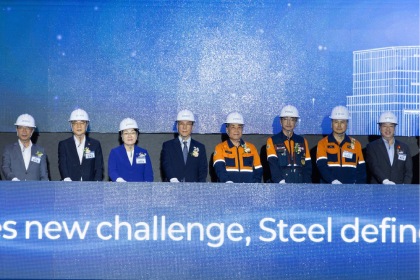
EAF expected to significantly reduce emissions
POSCO stated that the investment was made to comply with domestic and international decarbonization policies and to respond to growing customer demand for low-carbon steel products.
According to the company, the electric arc furnace can reduce carbon emissions by up to 75 percent compared with its conventional blast furnace-based steelmaking process through the use of scrap as a raw material.
Company develops hybrid steelmaking technology
The company is also developing a refining process referred to as “mixing technology,” which combines molten iron produced in blast furnaces with steel produced in electric arc furnaces. POSCO stated that this approach is intended to maintain the quality of high-grade steel products while lowering carbon emissions.
The company aims to begin mass production of automotive steel sheets and electrical steel using this technology by 2030. To support this objective, POSCO is developing additional technologies, including scrap sorting and classification systems and more precise control of steel composition during refining. The company has designated high-grade EAF steel as one of its eight strategic products and established an integrated project team covering research, production and sales.
HyREX development continues
POSCO also plans to develop transitional decarbonization technologies within its existing production system, including blast furnace hydrogen injection, top-bottom blowing converters and carbon-reducing raw material technologies. The company noted increasing regulatory pressure related to carbon emissions, citing South Korea’s greenhouse gas reduction targets, the country’s fourth emissions trading scheme and the EU’s Carbon Border Adjustment Mechanism (CBAM). According to POSCO, the new electric arc furnace will play an important role in reducing greenhouse gas emissions and expanding its low-carbon steel portfolio until its hydrogen-based steelmaking technology, HyREX, reaches commercial scale.
In parallel, the company is advancing preparations for HyREX commercialization. Following approval of amendments to the Pohang National Industrial Complex development plan, POSCO has secured a site of approximately 1.35 million square meters near Pohang Steelworks. The company plans to operate a HyREX demonstration facility with annual production capacity of 300,000 mt and aims to complete commercialization technology development by 2030 as part of its phased transition toward a decarbonized steelmaking system.