German automotive manufacturer Mercedes-Benz has announced that it has signed a memorandum of understanding with hydrogen-based ironmaking technology company HyIron to advance the technical validation of a steel production process using hydrogen and iron ore fines, following the successful completion of a pilot project involving Anglo American's Kumba Iron Ore business.
According to the statement, the pilot project demonstrated the technical feasibility of producing direct reduced iron (DRI) directly from iron ore fines using hydrogen, without requiring energy-intensive pelletization. The resulting material was subsequently used in steelmaking and processed into a demonstration component for the Mercedes-Benz EQS vehicle.
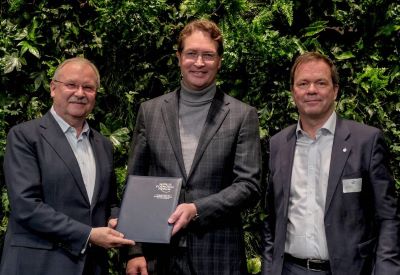
Pilot project achieves low emissions in hydrogen-based DRI production
As part of the project, iron ore fines sourced from the Sishen mine in South Africa's Northern Cape province, operated by Anglo American's Kumba Iron Ore business, were processed by HyIron into DRI using hydrogen and its proprietary rotary kiln technology.
According to HyIron, the production process generates Scope 1 and Scope 2 emissions of only 10 kg of CO2 per metric ton of DRI produced, indicating significant potential for reducing emissions in steelmaking.
Mercedes-Benz noted that iron ore fines are currently used mainly in blast furnaces, while their direct use in DRI production could expand the range of raw materials available for lower-emission steelmaking.
The company also stated that the Sishen and Kolomela iron ore mines have achieved the IRMA75 performance level following independent audits under the Initiative for Responsible Mining Assurance standard. This level indicates that the mining operations have substantially met all 40 critical requirements of the standard and at least 75 percent of its criteria in each of four assessment areas.
Mercedes-Benz stated that the project forms part of its efforts to reduce emissions across its steel supply chain, covering activities from raw material extraction to finished automotive components.
Meanwhile, the company has outlined its broader decarbonization targets, including a 90 percent reduction in emissions from its own production operations and an overall 70 percent reduction in carbon emissions across relevant stages of its value chain by 2039, compared with 2019 levels. It also aims to reduce vehicle use-phase emissions by 80 percent, subject to market conditions.