Swedish energy company Vattenfall has announced that it has used low-emission steel supplied by Swedish steelmaker SSAB for the solar panel mounting structures at its Juliusburg/Krukow solar park in Germany, reducing carbon emissions associated with the structures and their supply chain by 67 percent compared to conventional steel.
The 80 MW solar park in Germany's Schleswig-Holstein state, was commissioned in the summer of 2026. Vattenfall has selected SSAB Zero steel for the solar panel substructures in the Krukow section of the project.
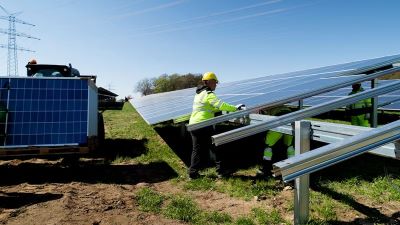
SSAB Zero steel offers 67% reduction in carbon emissions
According to Vattenfall, the mounting structures are manufactured using recycled steel produced by SSAB with fossil-free electricity. The company stated that technical evaluations showed SSAB Zero steel provides the same strength and quality as conventional steel, while the financial impact of using the material was considered reasonable in relation to the sustainability benefits.
Vattenfall noted that using lower-emission materials in solar park construction is part of its efforts to reduce emissions associated with renewable energy projects, including those generated during the construction phase and throughout the supply chain.
Solar park expected to generate up to 80 GWh of electricity annually
The Juliusburg/Krukow solar park has a nominal capacity of 80 MWp. According to Vattenfall, the facility can generate up to 80 GWh of fossil-free electricity annually.
Meanwhile, Vattenfall stated that it is also using low-emission steel in other renewable energy projects, including the Clashindarroch II onshore wind farm in the UK and the Nordlicht offshore wind cluster in the German North Sea.
SSAB stated that the use of SSAB Zero steel in the solar park demonstrates how lower-emission materials can be incorporated into renewable energy infrastructure while maintaining the performance and quality of conventional steel.