German finance minister and vice chancellor Lars Klingbeil has called for Germany to adopt a firmer stance toward China, accusing Beijing of failing to comply with global trade rules and highlighting growing competitive pressure on Germany's steel and automotive industries, according to a report by Bloomberg.
Speaking in Bitterfeld-Wolfen in eastern Germany on August 20, Klingbeil stated that Germany needs to make key industrial sectors, including steel and automotive, more resilient in order to preserve employment and withstand competition from China.
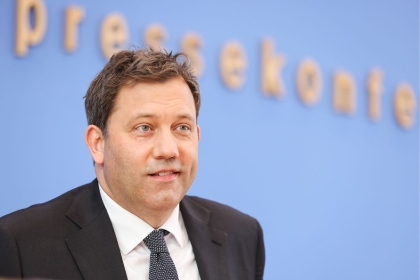
Klingbeil points to Chinese subsidies and overcapacity
According to Klingbeil, Germany's commitment to free trade has put it at a disadvantage as China uses measures such as state subsidies, overcapacity and joint venture requirements to strengthen its position. He stated that Germany and Europe need to take further action in response.
The comments come as the German government under Chancellor Friedrich Merz takes a tougher approach toward China amid concerns over Europe's competitiveness. German authorities have also been assessing areas of Chinese economic vulnerability that could potentially be used in the event of a broader trade dispute between the EU and China.
EU considers further trade defense measures against China
In June, EU leaders asked the European Commission to present additional trade defense measures aimed at addressing the bloc's trade deficit with China, which exceeds €1 billion per day.
Klingbeil has previously advocated a stronger response to Chinese trade practices. In February, he argued that Germany should not maintain unrestricted market openness while other countries pursue policies that disadvantage German industry. At the time, he also cited China's production of lower-priced green steel as an example of the competitive challenges facing German manufacturers.