The German Steel Federation (WV Stahl) has called for concrete measures to address the impact of persistently low water levels on industrial logistics and Germany's competitiveness following a high-level meeting convened by Federal Transport Minister Steffen Bilger.
As SteelOrbis reported previously, the water level at Kaub on the Middle Rhine has recently fallen below the previous record low registered in 2018. The situation has resulted in approximately three times as many journeys being required to transport only around one-third of inland vessels' normal cargo volumes, increasing freight costs and further tightening available shipping capacity.
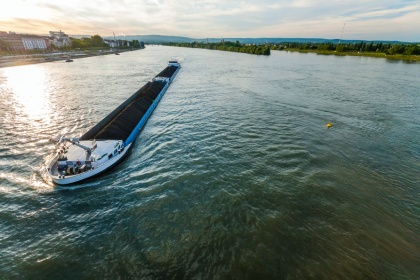
Inland waterways handle one-third of German steel transport
Kerstin Maria Rippel, CEO of WV Stahl, stated that the ongoing low water levels are creating significant challenges for industry, threatening security of supply and the competitiveness of Germany as a business location. Rippel said around one-third of the German steel industry's transport volume is handled via inland waterways, making inland navigation indispensable for the sector.
German steel companies have taken precautions based on their experience with previous low-water periods, including establishing additional storage capacity and developing more flexible logistics chains. However, WV Stahl stressed that individual companies cannot compensate for structural deficiencies in Germany's transport infrastructure on their own.
Call for stronger rail freight alternatives
Against this backdrop, Rippel called for the optimization of cargo handling on the Middle and Lower Rhine to be accelerated, while rail freight should be strengthened as a reliable alternative. She also called for additional road and rail transport capacity to be made available during crisis situations.
Rippel emphasized that the discussions should now be followed by concrete measures and a binding implementation timetable, warning that low water levels must not become a permanent competitive disadvantage for German industry.