The German Steel Recycling and Disposal Association (BDSV), the German Association of Metal Traders and Recyclers (VDM) and the German Association for Secondary Raw Materials and Waste Management (bvse) have warned that record-low water levels on the Rhine could cause widespread logistics disruptions across Germany's steel industry and other industrial sectors.
According to the associations, the water level at Kaub on the Middle Rhine has fallen below the previous record low registered in 2018. On particularly affected sections, inland vessels are currently able to transport only around one-third of their normal cargo volumes. As a result, approximately three times as many journeys are required to transport the same amount of material, increasing freight costs and further tightening available shipping capacity.
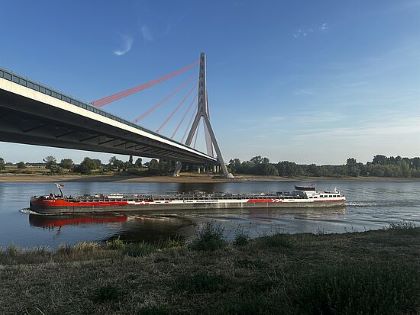
Inland waterways handle 31.6 percent of steel industry freight
Citing data from the German Steel Federation (WV Stahl), the associations stated that 120.7 million mt of goods were transported for Germany's steel industry in 2024. Rail accounted for 49.3 percent of this volume, inland waterways for 31.6 percent and trucks for 19.2 percent.
Around 38 million mt are transported annually for the steel industry via inland waterways. According to the associations' calculation, if just half of this volume theoretically had to be shifted to road transport, more than 760,000 additional truckloads would be required annually, assuming a payload of 25 mt per truck. The associations noted that railways would also be unable to compensate for a significant loss of inland shipping capacity at short notice.
Higher German steel output adds to logistics pressure
The logistics pressure is being compounded by higher steel production. Germany produced approximately 18.6 million mt of crude steel in the first half of 2026, up 8.9 percent year on year, increasing the need for reliable supplies of raw materials such as steel scrap and for the transportation of finished steel products.
BDSV, VDM and bvse warned that disruptions could spread along the entire industrial value chain, affecting steel-intensive sectors including construction, automotive and mechanical engineering. Recycling companies could also face rising inventories and reach their material acceptance limits if scrap transportation is disrupted, while steelmakers could experience difficulties securing sufficient raw material supplies.
The associations also pointed out that a recovery in Rhine water levels would not immediately eliminate the logistics backlog, as accumulated cargo volumes from different industries would compete for limited shipping, rail and trucking capacity. They called for coordinated short-term measures covering waterways, rail and road transport, including faster approvals for alternative transportation and improved coordination of infrastructure works. In the longer term, they urged investment in more resilient waterways, vessels capable of operating at low water levels, additional rail freight capacity and improved multimodal transshipment infrastructure.