A coalition of 16 German industry associations, business initiatives and environmental organizations, including the German Steel Federation (WV Stahl), has called on the German federal government to abandon plans to divert €2.7 billion in emissions trading revenues from the Climate and Transformation Fund (KTF) to the general budget.
The planned diversion was approved by the German cabinet in July as part of the draft 2027 budget, which is currently under discussion in the Bundestag, as SteelOrbis reported previously. According to the coalition, the revenues are legally allocated to the KTF and should continue to finance the climate-neutral transformation of German industry.
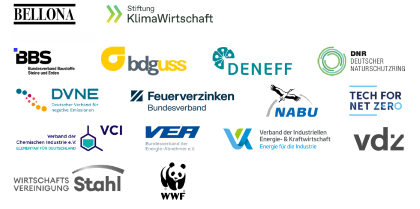
WV Stahl among 16 organizations backing initiative
The initiative was launched by science-based industrial climate protection organization Bellona Deutschland and Stiftung KlimaWirtschaft. In addition to WV Stahl, the signatories include the German Chemical Industry Association (VCI), the German Foundry Industry Association (BDG), the German Cement Works Association (VDZ), the Association of Industrial Energy and Power Industry (VIK), the Nature and Biodiversity Conservation Union (NABU) and WWF Germany, among others.
The signatories stated that revenues generated through emissions allowance payments by industry and the energy sector should be returned in full to the companies concerned and used for climate-related purposes, particularly industrial decarbonization investments and reductions in energy costs. They also called for the subsidy for electricity transmission grid fees to be maintained in full.
Coalition warns of impact on investment planning
According to the coalition, reducing the amount of emissions trading revenues channeled back into industrial decarbonization would weaken the planning certainty required for long-term investments and negatively affect the international competitiveness of German industry.
WV Stahl CEO Kerstin Maria Rippel stated that the transition toward climate-neutral steel production requires reliable political framework conditions and that withdrawing billions of euros from the KTF would send the wrong signal. She added that the current Middle East crisis is putting additional pressure on energy markets and driving already volatile electricity prices higher. Rippel stressed that emissions trading revenues should consistently be used for decarbonization and reducing energy prices, adding that the German steel industry cannot withstand further burdens.
The coalition also argued that Germany needs broader fiscal reforms to consolidate its budget and create additional investment capacity, but stated that these measures should not come at the expense of climate-related investments or funding for industrial modernization.