The European Automobile Manufacturers' Association (ACEA), the European Association of Automotive Suppliers (CLEPA) and Tyres Europe have called on EU policymakers to adopt a more limited and proportionate extension of the Carbon Border Adjustment Mechanism (CBAM) to downstream products, warning that the current proposals could increase costs and administrative burdens throughout the automotive value chain.
In a joint letter issued ahead of the upcoming interinstitutional negotiations on the CBAM scope extension, the associations said they support the mechanism's objective of preventing carbon leakage but argued that downstream products should only be included where a material carbon leakage risk has been demonstrated and where the required methodology, emissions data and verification capacity are available.
The associations stated that the proposed implementation date of 2028 is too early, arguing that more time is required to assess how the existing CBAM system works in practice before significantly expanding its scope. According to the letter, the list currently under negotiation covers hundreds of CN codes and goes beyond what the associations consider a technically justified approach. They called instead for an expansion focused on products facing the greatest carbon leakage risks and using the smallest necessary number of relevant precursors.
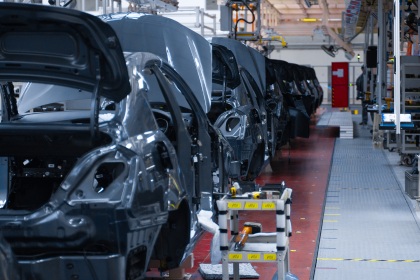
Multiple carbon costs across automotive value chain
ACEA, CLEPA and Tyres Europe also warned that automotive manufacturers already face increasing carbon-related costs for steel and aluminum produced in Europe. They argued that extending CBAM to downstream products without appropriate safeguards could result in multiple carbon costs across the value chain and shift carbon leakage risks from upstream producers to downstream manufacturers.
The associations additionally called for simplified compliance requirements, including more proportionate default values and easier primary emissions data reporting. Automotive importers operating through long and complex supply chains may have limited ability to obtain actual emissions data from upstream suppliers and could therefore be forced to rely on default values.
They also called for CBAM default values to reflect different production routes, particularly for aluminum scrap and post-consumer scrap. According to the associations, applying a single default value without distinguishing between primary and secondary production could discourage recycling.