The European Automobile Manufacturers’ Association (ACEA) has expressed concerns over ongoing discussions on extending the scope of the Carbon Border Adjustment Mechanism (CBAM) to additional downstream products, arguing that the proposed breadth of the extension and its implementation timeline require further consideration.
According to ACEA, it remains unclear why certain products have been selected for inclusion while others have been excluded. Although the methodology presented by the European Commission is considered reasonable in principle, the association said the absence of detailed calculation methods has created uncertainty regarding the selection of automotive products covered by the proposal.
ACEA noted that, as a major importer of steel and aluminum products, the automotive industry would be significantly affected by any downstream extension of CBAM and stressed that the sector’s concerns should be taken into account during the legislative process.
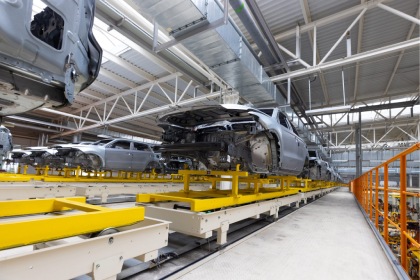
Association recommends excluding passenger cars
Among its key recommendations, ACEA said passenger cars should remain outside the scope of the mechanism at this stage, citing the significant administrative burden, compliance costs and implementation challenges associated with their inclusion. In contrast, it supported the inclusion of heavy-duty vehicles under CN codes 8701 and 8704, noting that these vehicles have more localized supply chains and contain substantially higher volumes of steel than passenger cars.
The association also argued that the functioning of the existing CBAM framework should be fully assessed before any expansion takes place. It warned that extending the scope as early as 2028, before a comprehensive post-2027 evaluation of the initial mechanism, could create significant implementation risks, including additional pressure on the limited number of accredited verifiers. ACEA therefore recommended postponing any downstream extension until 2030.
ACEA proposes measures to reduce compliance burden
To reduce the administrative burden on companies, ACEA proposed introducing an additional de minimis threshold of one metric ton per supplier per reporting period, stating that such a measure would simplify reporting obligations for large importers while preserving the environmental integrity of the existing CBAM threshold.
The association also expressed concern over the possible inclusion of finished complex automotive components, noting that many of these products consist of dozens or even hundreds of individual parts sourced through extensive supplier networks. According to ACEA, tracing emissions throughout these supply chains and determining accurate embedded emissions would impose significant administrative and financial burdens. It therefore called for the inclusion of such products to be limited.
ACEA urged the European Parliament, the Council and the European Commission to take these recommendations into account during the legislative process, stating that only a proportionate and practical approach would allow CBAM to achieve its objectives within the automotive value chain.