Australian mining company BHP has announced that its operational greenhouse gas emissions in the 2025-26 financial year were 33 percent below its FY 2020 baseline, supported by increased renewable electricity use, as the company continues developing technologies to reduce diesel consumption across its mining operations.
According to Maria Palomar, BHP's group officer for sustainability and social value, renewable sources accounted for 80 percent of electricity consumption at the company's operated assets globally in FY 2026. This included 100 percent renewable electricity at its Chilean operations and up to 30 percent at Western Australia Iron Ore's (WAIO) port operations in Port Hedland. In addition, BHP Mitsubishi Alliance's (BMA) operations have been supplied with 100 percent renewable electricity since July 1, 2026, based on forecast demand.
FY 2030 emissions reduction and 2050 net-zero targets maintained
BHP stated that it remains on track to achieve its target of reducing operational emissions by at least 30 percent by FY 2030 compared with FY 2020, while maintaining its longer-term goal of net-zero operational emissions by 2050.
However, the company noted that emissions could temporarily increase as new production capacity comes online, with its growth projects potentially supporting approximately three percent annual production growth between FY 2027 and FY 2030.
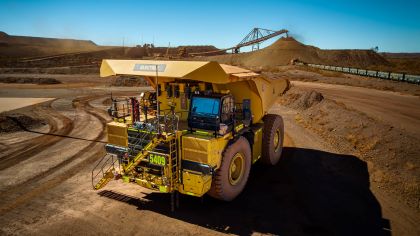
Electrification of diesel-powered mining equipment remains a key challenge
BHP identified the replacement of diesel-powered mining equipment with electric alternatives as one of the main challenges in achieving further emissions reductions. According to Palomar, electrification requires significant changes to mining operations, including the development of charging infrastructure, power supply systems and equipment utilization. The company is also evaluating alternative technologies, including hybrid equipment, power-agnostic platforms and sustainably sourced biofuels.
In addition to its efforts to reduce diesel consumption, the company highlighted improvements in freight transportation and procurement as part of its broader sustainability strategy. The revised logistics system is expected to transport approximately 1.3 million mt of freight by rail annually, eliminating around 13 million truck kilometers from South Australian roads and reducing Scope 3 emissions by approximately 20,000 mt per year.
Looking ahead, BHP emphasized that achieving further emissions reductions will depend on technological development, infrastructure investment and operational trials, particularly as the company moves beyond renewable electricity adoption toward reducing diesel consumption across its mining operations.