The Spanish steelmakers association (UNESID) has reiterated the importance of correctly classifying steel products under European Union customs regulations, warning that the implementation of the Carbon Border Adjustment Mechanism (CBAM) has increased the financial consequences of the potential misclassification of imported goods.
According to UNESID, several EU member states have recently identified cases in which certain large-diameter steel pipes used for foundation works and other industrial applications were declared as construction structures. This classification is inconsistent with a Binding Tariff Information (BTI) decision issued by the European Union and effective since August 2025, which classifies these products as large-diameter welded steel pipes. UNESID added that these cases follow similar concerns previously raised regarding pipes intended for solar tracker structures.
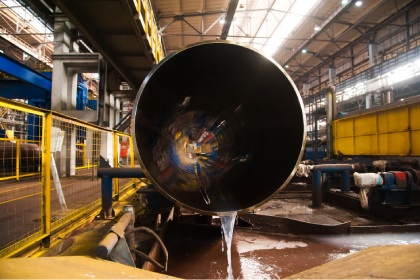
Association warns of higher CBAM costs from incorrect classification
The association emphasized that correct tariff classification is a legal obligation essential for ensuring the proper functioning of the EU internal market, providing legal certainty for operators and maintaining a level playing field among importers. It therefore called for the uniform application of tariff classification criteria across all member states. UNESID stated that the entry into force of CBAM has further increased the importance of correct classification because the mechanism significantly changes the financial implications associated with the tariff treatment of certain products.
According to the association, CBAM default emission values assign substantially higher emissions intensity to construction structures than to certain steel pipes. It noted that, for products originating from China or Turkey, the default emission values for structures are almost four metric tons of CO₂ higher than those for pipes. Based on these default values and using an illustrative carbon price of €80/mt of CO₂, UNESID estimated that the resulting difference in CBAM obligations could reach approximately €300/mt.
Verification challenges remain under CBAM
Although CBAM allows importers to replace default values with verified emissions data, UNESID stated that significant practical challenges remain. The association pointed out that the EU has not yet completed the accreditation system required to verify emissions for 2026. It also noted that pipe manufacturers require verified emissions data for the steel used as raw material, adding further complexity to the verification process.
Commission reviews downstream steel products under trade defense measures
UNESID also highlighted that the European Commission has launched the procedure under the European Steel Instrument Regulation to examine whether additional downstream steel products should be brought within the scope of EU trade defense measures. The association noted that the products under consideration include construction structures classified under CN code 73089098, with EU imports reaching approximately 1.6 million mt in 2025, according to Eurostat COMEXT data. This volume was 2.5 times higher than in 2019 and approximately double the level recorded in 2021.
UNESID stated that this trend further underlines the importance of ensuring correct tariff classification and consistent application of EU rules across all member states.