Market Talks event organized by SteelOrbis at Swissôtel The Bosphorus in Istanbul on June 18, 2026 brought together sector representatives with a record attendance of more than 750 participants. Erdemir was the supporting company of the organization, while the sponsors were Ayba Makina, Seçkin Metal, Yatırım Finansman, Davutoğlu Metal, Nea Metal, Soybaş Demir Çelik, Yametaş and Zey Demir. The meeting addressed changing dynamics in global steel trade, the EU’s new safeguard measures, energy and logistics costs, the course of flat steel demand in Turkey, financing pressure and expectations for the second half of 2026.
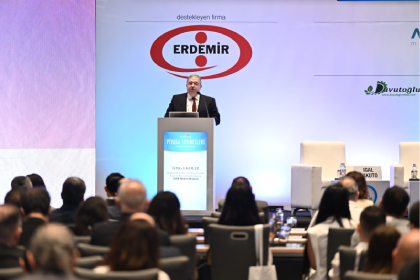
Delivering the opening speech, Tolga Koçer, OYAK Mining Metallurgy Distribution Channels and Long Products Sales and Marketing Director, stated that the steel industry has been struggling with high volatility, supply chain issues and geopolitical crises since the pandemic period. Noting that issues such as quotas, carbon taxes, oversupply and incentives for domestic products continue to determine the direction of the industry, Koçer emphasized that protectionism is no longer being implemented through individual measures, but through simultaneous and multi-layered policies.
Koçer also drew attention to the strategic importance of steel, stating that raw material and energy security have become increasingly critical for the steel industry. He said that the advanced level of steel production in Turkey is one of the key elements behind progress in areas such as the defense industry, ships, submarines and aircraft carrier projects. Koçer added that OYAK Mining Metallurgy has made investments totaling 4 billion $ over the past five years and will continue its investments in line with its net zero carbon target by 2050.
Protectionism and cost pressure stand out in global trade
In the first session titled “New Balances in the Global Steel Market: Risks and Opportunities for Turkey,” the impact of developments centered on the Strait of Hormuz on energy, freight and raw material costs, the strength of Asian supply, the EU’s new safeguard measures and Turkey’s position against dumped products were evaluated. Özkan Akşit, NOKSEL Steel Pipe Purchasing, Pipe/Profile and Solar Projects Sales Director, stated that the increase in energy and logistics costs has created serious pressure, especially in fixed-price contracts, noting that projects are often budgeted in advance, while sudden cost increases may lead to project postponements or cancellations.
Mehmet Ali Fincan, general manager of Yametaş Yassı Metal Mamülleri and board member of YİSAD, said that imports provide indispensable source diversification for the Turkish steel market, but that a clear price advantage is now needed to conclude purchases from Asia. According to Fincan, although alternative sources such as Indonesia, Vietnam and Malaysia have come into play in addition to China, buying from Asia does not seem as attractive as before under current conditions due to rising freight costs and the narrowing price gap.
Erkut Yılmaz, OYAK Mining Metallurgy Pipe Profile and Rolling Sector Marketing and Sales Director, stated that volatility in energy and raw material prices poses a significant risk for producers. However, he said that Erdemir and İsdemir do not reflect this volatility directly to their customers thanks to cost management, raw material basket optimization, energy efficiency investments and their ability to make forward sales. Yılmaz also stated that Erdemir and İsdemir plan transformation investments totaling 3.2 billion $ to reduce carbon emissions.
Igal Zakuto, deputy CEO and strategist at RZK Çelik, said that, in global competition, the difference is no longer created only through production capacity, but also through the ability to process steel in line with customers’ needs. According to Zakuto, steel service centers serve as a critical bridge between producers and end-user industries, while Turkey has an advantageous position in this field with its strong infrastructure.
EU measures increase the importance of local crude steel
The EU’s new safeguard measures, narrowing quotas, the increase in the duty to be applied in case of quota exhaustion to 50 percent and the requirement to determine the origin where crude steel is melted and poured were also among the prominent agenda items in the session. Mehmet Ali Fincan stated that the EU has been introducing regulations making imports more difficult for years, but that Europe’s import needs have not been completely eliminated. Özkan Akşit said that narrowing quotas make export planning more difficult, while demand continues for certain product groups in Europe.
According to Erkut Yılmaz, Turkey becoming a transit point for dumped products heading to Europe as a result of the EU’s measures could damage the country’s position as a reliable supplier. For this reason, local crude steel production will become more important for the exporting industry in terms of origin transparency and certification.
Zakuto also said that, as the EU door narrows, the risk is increasing that tonnages unable to find a place in the world will be redirected to Turkey. Stating that Turkey may become a target market due to its strong steel consumption and processing capacity, Zakuto emphasized that the line between competition and unfair competition should be carefully protected. According to Zakuto, while competition improves quality and efficiency, sales below cost weaken both domestic producers and industrial companies in the long term.
Flat steel demand signals a cautious recovery
In the second session titled “Where Is Demand Heading in Flat Steel? Sectoral Dynamics and Expectations in Turkey,” the sectoral outlook for flat steel demand in Turkey, the impact of high interest rates on purchasing behavior and expectations for the second half of 2026 were evaluated. Sevi Koçak, marketing manager at OYAK Mining Metallurgy, stated that flat steel consumption in Turkey is around 19 million mt, adding that flat steel consumption increased by nine percent in the first four months of 2026 and that, although seasonal sluggishness is felt in the summer months, they expect a recovery in the white goods and automotive sectors in the final quarter.
Ahmet Soybaş, deputy general manager of Soybaş Demir Çelik, stated that 2026 began with expectations that interest rates and inflation would decline, but geopolitical developments have changed these expectations. According to Soybaş, while the possibility of war-related price increases initially supports demand, companies avoid working with large inventories due to high financing costs. While the market is increasingly shifting toward products with a high stock turnover rate, the number of companies with the financial strength to make deferred sales remains limited despite the increase in deferred purchase requests.
Atıf Ceritbinmez, founding partner and chairman of CRT Metal, said that there is a shift in the product composition toward coated, qualified and value-added products. Stating that demand for these products has increased in the automotive, white goods and machinery industries, Ceritbinmez said that Turkey is struggling in terms of competitiveness due to high energy costs and dependence on raw material imports.
The panelists’ common assessment for the second half of 2026 pointed to a cautious recovery. While Sevi Koçak said that she expects a recovery especially in the final quarter, Ahmet Soybaş stated that, if the war ends, uncertainties in Europe decrease and the decline in inflation resumes in Turkey, interest rate cuts may signal a recovery for the market.
Following the sessions, in presentations on the Turkish and global economies, Dr. Barış Esen, corporate communications director at Yatırım Finansman, and Gizem Öztok Altınsaç, chief economist at TÜSİAD, discussed the impact of geopolitical developments on the economy and markets, expectations for the post-war period and the reflections of financial conditions on the real sector.