Turkey's electricity demand is expected to increase substantially in the coming decades, driven by industrial electrification, electric vehicles, data centers, green hydrogen, heat pumps and increasing cooling requirements, according to the Energy Sector Report 2026 prepared by the Investment and Finance Office of the Presidency of the Republic of Turkey in cooperation with APLUS Energy.
Turkey's gross electricity consumption increased from 279.3 TWh in 2016 to 360.9 TWh in 2025, representing average annual growth of approximately 2.9 percent. Industry remained the country's largest electricity consumer in 2025, accounting for 40.2 percent of billed consumption, followed by households with 27.1 percent and commercial and service activities with 25.9 percent.
By 2053, Turkey's electricity demand is projected to reach 1,271.4 TWh, while electricity is expected to account for 55.6 percent of final energy consumption. Renewable sources are projected to provide 69.1 percent of electricity generation, while intermittent renewables are expected to account for 61.4 percent.
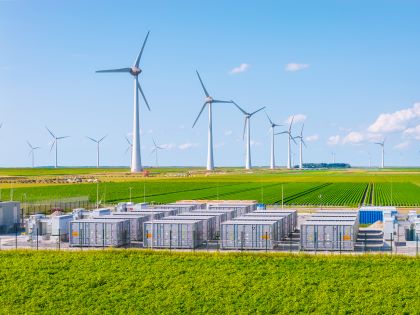
Wind and solar capacity targeted to reach 120 GW by 2035
Turkey's installed electricity generation capacity reached 122.5 GW at the end of 2025, up from approximately 78 GW in 2015. Renewables represented 76.3 GW, equivalent to 62.3 percent of total capacity.
Solar capacity stood at 25.12 GW, wind at 14.77 GW and hydropower at 32.29 GW. The country aims to increase its combined wind and solar capacity from 39.89 GW in 2025 to 120 GW by 2035, comprising 76.9 GW of solar and 43.1 GW of wind capacity. Meeting the target will require approximately 8-9 GW of new wind and solar installations annually. Turkey is also targeting 35.1 GW of hydropower and 5.1 GW of combined geothermal and biomass capacity by 2035.
Electricity system flexibility becomes increasingly important
The report highlighted increasing pressure on electricity system flexibility despite Turkey's high overall installed capacity. The country's effective reserve margin fell to approximately three percent in 2025, reflecting renewable intermittency, hydropower availability and maintenance requirements.
Accordingly, battery storage, demand response, hybrid renewable projects and dispatchable generation are expected to become increasingly important. Battery storage has expanded rapidly following regulatory changes introduced in 2022, with approximately 33 GW of storage-integrated renewable projects receiving preliminary licenses.
Turkey's National Energy Plan targets 7.5 GW of battery storage by 2035, while the Ministry of Energy and Natural Resources' 2024-28 Strategic Plan targets 10 GW by 2028.
Green hydrogen to increase electricity demand in steel and other industries
The report identified green hydrogen as an important future source of electricity demand, particularly for steel, cement and chemicals. Turkey's National Hydrogen Strategy targets electrolyzer capacity of 2 GW in 2030, 5 GW in 2035 and 70 GW in 2053.
Turkish ETS expected to support industrial decarbonization
The report also highlighted the role of Turkey's planned Emissions Trading System (ETS) in industrial decarbonization. Its pilot phase is expected to cover 2026-27 and focus on electricity generation and carbon-intensive industries, including steel and cement, with installations emitting more than 50,000 mt of CO₂e annually.
According to the report, allowances are expected to be fully allocated free of charge during the pilot period, with auctions gradually introduced during the first implementation period from 2028 to 2035. The Turkish ETS is expected to cover approximately 47 percent of the country's emissions during the first implementation period.
The report also estimates that the introduction of a domestic carbon price could reduce the Carbon Border Adjustment Mechanism (CBAM)-related costs faced by Turkish industry by more than 50 percent by 2027, as eligible carbon costs paid in Turkey can be deducted from EU CBAM liabilities.
Energy investment potential estimated at $200 billion
The report estimates total energy investment potential at approximately $200 billion, covering renewable generation, storage and wider energy infrastructure. Around $30 billion in investment is planned for transmission, distribution and other grid infrastructure through 2035, as Turkey seeks to accommodate growing renewable capacity and electricity demand.
Wholesale electricity prices are expected to become increasingly dependent on hourly market dynamics as renewable penetration rises. Growing solar and wind generation is expected to reduce prices during periods of high renewable output, while natural gas-fired plants are expected to continue setting marginal prices during peak-demand periods and times of low renewable production. As a result, the report expects wider differences between low midday electricity prices and higher morning and evening prices, increasing the importance of battery storage and other flexible resources.