Norwegian government agency Enova has announced that it will provide up to NOK 244 million ($25.54 million) in funding to Nordic Circles and Alsaker Stål for a project aimed at reusing steel from decommissioned ships in new buildings, potentially reducing greenhouse gas emissions associated with building construction by up to 25 percent.
The funding, conditional on the project proceeding, will support the establishment of a circular steel value chain in Norway, involving the recovery, cleaning, quality assurance and recertification of steel from decommissioned vessels for use in construction.
AI and automation to support commercially competitive steel reuse
The project builds on previous pilot initiatives supported by the Research Council of Norway, Siva and Innovation Norway, which demonstrated the feasibility of using recovered ship steel in construction. One example is an eight-story office building in Bergen.
According to Enova, the project will use artificial intelligence-based planning tools, automation and new steel cutting and cleaning technologies to improve efficiency and make reused ship steel commercially competitive with newly produced steel. The initiative also involves investment of up to NOK 520 million ($54.44 million) by Alsaker Stål, part of Tertnes Holding, in cooperation with Nordic Circles and Enova.
European ship steel reuse could cut carbon emissions by 17 million mt annually
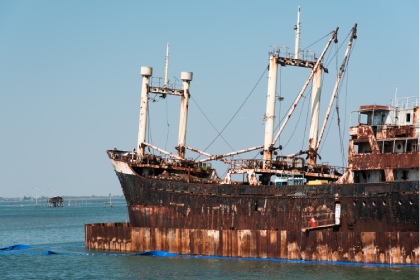
Enova stated that steel production can account for up to 25 percent of greenhouse gas emissions associated with building construction. Reusing existing steel components could eliminate almost all emissions associated with producing the equivalent quantity of new steel. Approximately 10 million mt of steel from European ships is scrapped annually, with most vessels dismantled in Asia. Recovering and reusing this material in Europe could therefore create new industrial opportunities while reducing demand for newly produced steel.
Enova estimates that reusing all steel recovered from decommissioned European ships in new buildings could reduce emissions associated with European steel production by up to 17 million mt of carbon dioxide annually, equivalent to more than one-third of Norway's annual greenhouse gas emissions. The project aims to establish a commercially viable model for ship steel reuse that could be expanded across Norway and other European markets.