Morocco's Ministry of Industry and Trade has announced a three-year extension of safeguard duties on certain welded iron and steel tube and pipe imports, maintaining the measure through November 5, 2029. The additional duty will start at 19 percent on November 6, 2026, and decline by one percentage point annually.
Additional duty to fall to 17 percent by final year
Following a review investigation launched on June 17, 2026, the ministry announced that the additional duty will apply at 19 percent from November 6, 2026, to November 5, 2027, before decreasing to 18 percent from November 6, 2027, to November 5, 2028, and to 17 percent from November 6, 2028, to November 5, 2029. The duty will be removed from November 6, 2029.
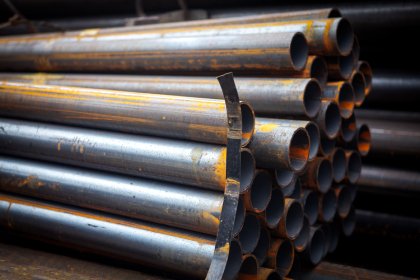
The measure covers welded iron or steel tubes and pipes with circular, square or rectangular cross-sections, including conical or pyramidal forms. The products are classified under Moroccan customs tariff codes 7306191090, 7306199900, 7306301099, 7306309900, 7306501090, 7306509900, 7306611010, 7306611090, 7306619000, 7306691000, 7306699900, 7306902012, 7306902019, 7306902022, 7306902029, 7306902039, 7306909019 and 7306909099.
Fragile domestic recovery supports extension
The ministry found that imports increased overall during 2022-2025, both in absolute and relative terms. Although domestic producers recorded improvements in several performance indicators, these gains remained too recent and fragile to demonstrate a lasting recovery.
Expanding global steel production capacity and increased protection in other markets were also identified as factors that could drive further imports if the safeguard were removed.
The ministry concluded that continued protection remained necessary to remedy and prevent serious injury, while confirming that local producers were implementing adjustments to improve competitiveness.
Developing-country exemptions remain under review
Imports from developing WTO members listed in the notice will remain exempt, including India, Indonesia, Vietnam, Egypt, the United Arab Emirates, Saudi Arabia, South Korea and Brazil.
The ministry may revise the exemption list based on import data, potentially bringing suppliers exceeding the three percent de minimis threshold within the measure's scope.