Turkish long steel producer Kardemir Karabük Demir Çelik Sanayi ve Ticaret A.Ş. (Kardemir) has announced that it will invest in solar power plants with a total capacity of 120.5 MWp together with its subsidiaries in order to meet a larger share of its energy needs from renewable sources, while continuing its efforts toward its annual steel production target of 3 million mt. Approximately TRY 3.96 billion ($80.76 million) is expected to be invested in the projects, with the plants scheduled to be commissioned in 2028.
The company stated that, in addition to increasing its production capacity, energy efficiency and low-carbon production are important components of its investment plans. As it moves toward its annual steel production target of three million mt, Kardemir continues to make investments aimed at reducing energy costs and increasing the share of renewable sources in its total energy consumption.
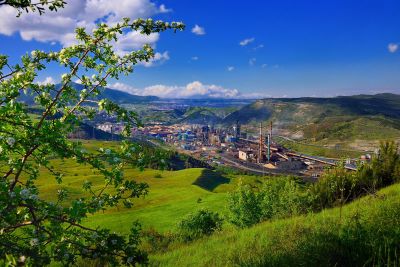
110.5 MWp solar power plant to be built for Kardemir
Under the planned investments, solar power plants with capacities of 85 MWe AC/110.5 MWp DC for Kardemir, 5 MWe AC/6.5 MWp DC for its subsidiary Kardökmak A.Ş., and 2.5 MWe AC/3.5 MWp DC for Karçel A.Ş. will be built.
Accordingly, the total renewable energy capacity of Kardemir and its subsidiaries will reach 92.5 MWe AC/120.5 MWp DC.
The company stated that the land acquisition processes for the sites where the plants will be built have been completed. Project design, environmental impact assessment, zoning and other technical studies have also been initiated.
Kardemir aims to reduce energy costs with solar power investments
Through these investments, Kardemir aims to increase the amount of energy it obtains from renewable sources, manage its energy costs more effectively and reduce its carbon footprint.
The company also aims for the investments to contribute to the green transformation of Türkiye's industrial sector in line with the country's 2053 Net Zero Emissions target.
Kardemir stated that it will continue investing in a more efficient, competitive and low-carbon production structure by transforming its energy infrastructure alongside its production capacity.