The German Steel Federation (WV Stahl) has welcomed the German government's decision to establish a strategic natural gas reserve to safeguard supplies during emergencies, while warning that the proposed financing mechanism could impose additional costs on energy-intensive industries already facing high energy prices.
On November 11, the German government adopted a draft law establishing the legal framework for a strategic gas reserve designed to secure 30 days of gas supplies in the event of a complete supply disruption. The measure aims to strengthen Germany's preparedness for exceptional situations, including sabotage and targeted attacks on energy infrastructure. Although current gas supplies for households and businesses remain secure, diversified energy sources alone cannot eliminate the risks of future disruptions, according to the government. The planned reserve is intended to protect against physical supply shortages rather than high gas prices.
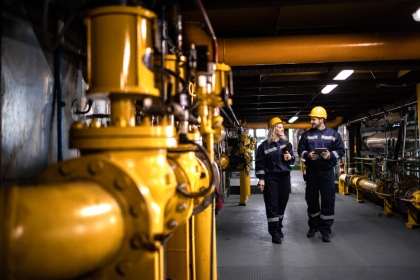
Rising gas prices and their impact on German steelmakers highlighted
Commenting on the decision, Kerstin Maria Rippel, CEO of WV Stahl, stated that sharp increases in natural gas prices resulting from the Middle East conflict are placing a significant burden on the German steel industry.
She also expressed concern about gas storage levels, emphasizing that steel producers depend on reliable and predictable supplies for their industrial operations and their transition toward climate-neutral steel production. Natural gas remains essential not only for existing steelmaking processes but also as a transitional energy source for the industry's decarbonization, according to Rippel.
German steel industry warns against financing gas reserve through new levy
While supporting measures to strengthen Germany's security of gas supply, the association warned that financing the strategic reserve through a new levy could further weaken the competitiveness of energy-intensive companies operating in international markets. Introducing additional charges would send the wrong signal at a time when industrial producers are already facing exceptionally high energy costs, it argued.
WV Stahl therefore welcomed the government's decision to examine targeted exemptions or relief measures for particularly energy-intensive companies, as well as its intention to discuss the issue with the European Commission. Rippel emphasized that additional financial burdens on industrial electricity and gas consumption should be avoided, particularly amid the current surge in energy prices. The association called on the German government to make full use of available measures to reduce energy costs while ensuring the security of natural gas supplies.