Africa is gaining increasing importance in international scrap flows, but the expansion of electric arc furnace-based steelmaking on the continent will not necessarily result in a proportional increase in imports. DRI availability, Asian competition in the finished steel segment and trade restrictions will all contribute to reshaping the supply chain. This was the picture that emerged from the BIR World Recycling Convention & Exhibition's ferrous metals division panel held in Malaga, Spain, from October 25 to October 27, 2026, during which market participants also drew attention to the risks that artificially low scrap prices may pose to collection and investment.
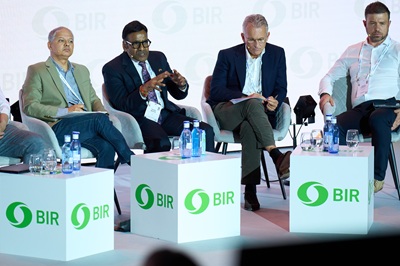
At the opening of the panel, division president Shane Mellor stressed that Africa cannot be considered a single market: alongside countries with well-established steel and recycling industries, there are others that still lack adequate infrastructure. According to worldsteel data reported by the BIR, African steel demand is expected to grow by around 4.4 percent in 2026, while the continent's production reached 19 million mt in the first nine months of the year, up by almost 10 percent year on year.
African steel production and scrap imports increase sharply
The half-year data presented by Rolf Willeke, statistical adviser to the ferrous metals division, confirm this trend in contrast to the global picture. Between January and June, global crude steel production declined by 0.7 percent to 931.5 million mt, while African production increased by 10 percent to 12.6 million mt compared to the same period of 2025. Egypt remained the continent's largest producer with 5.7 million mt, up 13.6 percent year on year, as well as Africa's largest scrap importer, with purchases almost doubling year on year, rising by 98.6 percent to 2.1 million mt.
For European suppliers, the Egyptian market has become particularly significant. In the first half of 2026, EU-27 scrap shipments to Egypt increased by 96 percent to 1.106 million mt. Overall, extra-EU exports rose by 4.5 percent to 8.52 million mt, while scrap consumption in the EU declined by 3.2 percent to 38.138 million mt. All changes are compared to the same period of 2025.
A fragmented scenario
However, Atilla Widnell, founder and managing director of Navigate Commodities, reported a subsequent slowdown in flows to Egypt. According to his analysis, the increase in finished steel imports from China is putting pressure on local production, while the greater availability of direct reduced iron (DRI) may replace part of the scrap in electric arc furnace charges. According to Widnell, the increase in EAF capacity should therefore be assessed alongside the raw material mix used. In Algeria, for example, the development of DRI-fed plants limits the need for imported scrap. Accordingly, the increase in electric arc furnace steelmaking capacity does not necessarily translate into greater scrap use in furnace charges.
A different trend was described for Morocco, where the commissioning of new electric arc furnace capacity has supported scrap purchases and reduced reliance on imported semis for rerolling. Widnell also stressed the need to distinguish between announced projects and plants that are actually operational, taking into account construction timelines and the gradual ramp-up of production volumes.
Widnell also referred to the future conditions governing non-OECD countries' access to European scrap under the EU Waste Shipment Regulation, outlining a scenario in which potential restrictions affecting Egypt and Morocco could particularly penalize smaller operators active in containerized scrap trading. The future scenario remains dependent on the outcome of the authorization process for non-OECD destinations, but the expectation is that the two countries may increasingly turn to the United States and the United Kingdom.
PPS and other scrap export restriction strategies
The South African case fueled the debate over the effects of export restrictions. Donald MacKay, CEO of XA Global Trade Advisors, explained that the Price Preference System (PPS) requires scrap to be offered at a discount to domestic buyers before it can be exported, while exports are also subject to an additional 20 percent duty. According to MacKay, these measures benefit local consumers but depress prices and incentives for collection. Quintin Starkey, president of the Metal Recyclers Association of South Africa, also highlighted the difficulties faced by coastal recyclers, which are burdened by transportation costs to consumers concentrated in the Johannesburg area. He also reported that employment in the sector has fallen from 15,000 to 9,000 workers, linking the price decline to divestments and companies exiting the market. The discussion also highlighted the major difficulties facing intra-African trade, as road and rail connections between African countries are severely lacking and river transportation cannot be relied upon.
Strong growth potential, but high risks
Sanjay Mehta, director of MTC Group and president of the Material Recycling Association of India, identified opportunities in the development of local collection, sorting and processing activities. At the same time, however, he reiterated that Africa cannot be considered a single market, dividing it into four macro-regions: northern, western, eastern and southern Africa, each with its own characteristics and at a different stage of development. He also highlighted the continent's growth potential, given its extremely young population and the significant infrastructure gap that needs to be addressed. According to Mehta, investment in this sector will support steel demand and, over time, generate new scrap availability.
Panel moderator Abhijeet Mahanta, director of Stelaris Resources, highlighted the transformation of several African markets from exporters into importers, citing a 300 percent increase in Nigerian scrap purchases within one year, albeit from still-limited volumes. Finally, Tom Bird, executive chairman of Enicor, drew attention to the risks associated with political instability across the African continent, regulatory uncertainty and the “elephant in the room”, namely corruption. “Trading is one thing - he stated - but putting hard dollars or euros into investment there is an entirely different matter. It takes careful preparation, understanding of local conditions and a realistic assessment of the political and commercial risks involved. If you decide to go into Africa, keep your eyes wide open.”