ArcelorMittal has welcomed the introduction of the Carbon Border Adjustment Mechanism (CBAM) in January 2026 and the changes to the EU’s Tariff Rate Quota (TRQ) system in July 2026, describing them as an important first step toward creating a more level playing field for Europe’s low-carbon steel industry. However, the company warned that additional measures are urgently needed to protect downstream steel industries.
According to Paul Brettnacher, chief marketing officer at ArcelorMittal Europe - Flat Products, the growing volume of imported steel derivative products that remain outside the scope of both CBAM and TRQ is undermining the effectiveness of the EU’s trade and climate policies. He said this particularly affects the electrical steels segment, as well as industries such as automotive and packaging.
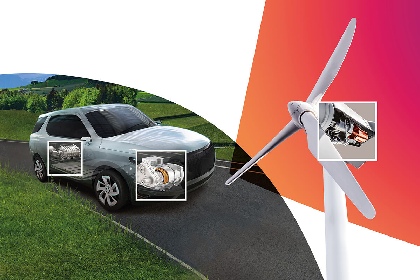
Rising imports threaten Europe’s electrical steel value chain
Brettnacher noted that non-grain oriented electrical steels (NGOES), used in electric motors and generators, are critical to Europe’s energy transition, as they are required for wind turbines, electric vehicles and industrial motors. Citing the Electromechanics Synergy Network (ESN), he warned that without further action Europe risks losing its domestic capability to manufacture electric motors and generators, with implications for industrial employment, strategic autonomy and defense readiness.
He also pointed to growing global steel overcapacity, particularly in Asia and the Middle East, where new capacity is often supported by government subsidies, resulting in exports at prices that EU producers cannot match. Nearly two-thirds of the NGOES used in Europe for new electric motors and generators are now imported from outside the EU without being subject to equivalent trade or carbon measures.
ArcelorMittal proposes additional measures by 2027
Brettnacher called for the CBAM to be extended to cover the entire NGOES downstream value chain, from first-transformation steel derivatives such as laminations, stators and rotor cores to downstream products including electric motors and generators. He also urged the EU to extend its steel trade measures (TRQs) to the same derivative and downstream products.
In addition, he called for EU-made generators and electric motors to be prioritized in public procurement and funding programs, including those related to wind power and electric vehicle powertrains. He stated that protecting primary steel alone is insufficient and argued that steel processing and downstream industries are an integral part of Europe’s industrial ecosystem, requiring equivalent protection to preserve investment, competitiveness and industrial capacity across the value chain.