European Commission President Ursula von der Leyen has stated that the European Commission is proposing to maintain free allowances under the EU Emissions Trading System (ETS) after 2030 for companies investing in decarbonization, as part of efforts to strengthen the competitiveness of European industry while maintaining the bloc's 2050 net-zero target.
Speaking at the annual conference of the Movement of the Enterprises of France (MEDEF) in Paris, von der Leyen said that energy costs remain one of the main factors limiting European competitiveness, with energy prices in Europe still two to three times higher than those in the United States or China. More than half of the energy consumed in Europe still comes from imported fossil fuels, while the Middle East crisis has resulted in additional costs exceeding €50 billion, according to the Commission president.
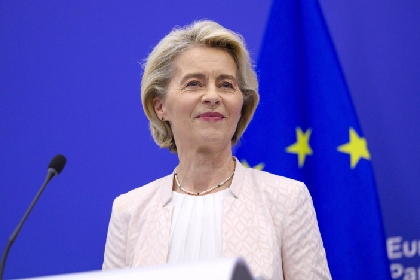
EU seeks to accelerate industrial electrification
Von der Leyen stated that more than 70 percent of EU electricity is currently generated from low-carbon sources, including renewables and nuclear power. However, electricity represents only around one-quarter of final energy consumption, highlighting the need to accelerate the electrification of industry, transport and buildings under the recently adopted Electrification Action Plan.
At the same time, she said that electricity is nearly three times more expensive than gas on average, stressing the need to reduce electricity costs through increased use of long-term contracts, grid development and storage investments. The EU installed more than 80 GW of renewable energy capacity last year, while six times that amount is still waiting for grid connection. In addition, around 10 TWh of renewable electricity was lost due to insufficient grid or storage capacity.
Proposed ETS measures to reduce industry's bills by almost €10 billion
Regarding the EU carbon market, von der Leyen said the Commission is proposing to modernize the system while maintaining the EU's objective of achieving net-zero emissions by 2050. In addition to maintaining free allowances after 2030 for companies investing in decarbonization, the proposed measures are expected to reduce industry's bills by almost €10 billion by 2030.
Furthermore, a new Investment Accelerator is expected to mobilize €30 billion from 2027 for projects ready to start, while the planned Industrial Decarbonization Bank is expected to enable the deployment of more than €100 billion by 2030.
Industrial Accelerator Act to include European preference
Von der Leyen also highlighted the planned Industrial Accelerator Act, which will include European preference, faster permitting for industrial projects and lead markets for sectors including steel, cement, aluminum, vehicles, batteries and clean technologies.
The legislation will also provide for more strategic use of public procurement and state aid. Von der Leyen stated that public funding should support low-carbon production, resilient value chains and European industry.
EU steps up trade defense measures
On trade, von der Leyen said the EU needs to ensure fair competitive conditions, particularly in its relations with China. She stated that Chinese imports into the EU have increased by 45 percent over the past five years, while European exports to China have declined, with the EU's trade deficit with China reaching almost €1 billion per day.
According to von der Leyen, the EU launched more than 30 new trade defense investigations last year, almost three times the historical average, while existing measures protect more than 600,000 European jobs.