German steelmaker thyssenkrupp Steel has announced that it has received the revised funding decision for its tkH2Steel decarbonization project in Duisburg, Germany, allowing the company to adjust the hydrogen ramp-up schedule for its planned direct reduction plant in line with current market conditions.
According to the company, the European Commission had previously confirmed that the proposed revisions comply with EU state aid regulations. The revised funding requirements have now become definitive, providing greater flexibility in the transition from natural gas to hydrogen-based steel production.
Slower hydrogen market development prompts changes to funding requirements
Thyssenkrupp Steel stated that the revisions were necessary due to significant changes in economic conditions since the original funding decision, particularly the slower-than-expected development of the hydrogen market. hydrogen production capacity, transportation infrastructure and import routes remain insufficient, while green hydrogen prices are considerably higher than initially anticipated.
Under the revised requirements, thyssenkrupp Steel will be able to gradually increase the proportion of hydrogen used in its direct reduction plant, depending on availability, economic feasibility and customer demand. The plant is designed to operate using natural gas, hydrogen or a mixture of both. According to the company, operating the facility exclusively on natural gas could reduce carbon emissions by more than 50 percent compared with the existing coal-based blast furnace production route. The company's long-term objective of transitioning to fully hydrogen-based operation remains unchanged.
New tender for long-term hydrogen supply
Following the revision of the funding requirements, thyssenkrupp Steel is preparing a new tender for the long-term hydrogen supply of its direct reduction plant, with the process expected to begin shortly. The company expects the direct reduction plant to become one of Europe's largest industrial hydrogen consumers once operational, creating long-term demand for hydrogen.
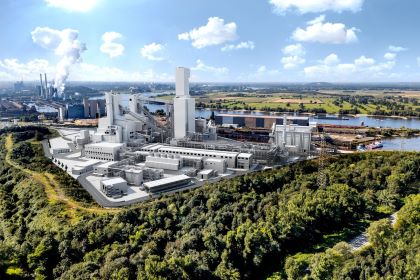
Construction of the tkH2Steel project is continuing at thyssenkrupp Steel's Duisburg site, where work on the direct reduction plant and two associated melters is progressing. The planned facility will have an annual production capacity of 2.5 million mt of directly reduced iron (DRI) and will be capable of operating entirely on hydrogen. According to thyssenkrupp Steel, the project could reduce carbon emissions by up to 3.5 million mt annually.