Egyptian Minister of Industry Khaled Hashem has announced that Austria-based RHI Magnesita is considering establishing an integrated refractory production facility in Egypt as the country seeks to localize advanced industrial technologies and strengthen the competitiveness of its manufacturing sector.
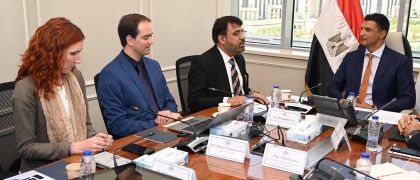
Minister Hashem discussed the proposed investment during a meeting with Hakim el-Din Ali, RHI Magnesita's regional president for the Middle East, Turkey and Africa. According to Hashem, the potential investment is aligned with Egypt's strategy to expand domestic production of critical materials used by heavy industries.
Refractory production identified as strategic industry
Egypt's updated Industry Strategy 2030 identifies refractory manufacturing as a strategic supporting industry for the country's construction materials and metals sectors.
Refractory materials are designed to withstand extremely high temperatures and harsh industrial environments, making them essential for furnaces, kilns and other equipment used in industries such as steelmaking. The materials are also used across various engineering industries and major national infrastructure projects.
Hashem stated that establishing local refractory production capacity could meet a significant portion of Egypt's domestic requirements while reducing dependence on imported products.
Egypt could become regional refractory export hub
The proposed facility could also supply customers across the Middle East and Africa, supporting Egypt's ambitions to strengthen its role as a regional manufacturing and export hub. According to Hashem, Egypt has become an increasingly attractive investment destination for major international heavy industry companies due to its investment incentives, existing industrial capabilities and broader business environment.
Ali stated that RHI Magnesita considers Egypt one of the region's most promising markets, highlighting the availability of abundant, high-purity raw materials as well as the country's strategic geographical position. These advantages could enable the proposed facility to serve both the Egyptian market and customers across neighboring regions.