The Organization for Economic Co-operation and Development (OECD) has stated in its Steel Outlook 2026 report that world steel trade is undergoing major shifts, as global steel exports declined in 2025 while China increased its shipments to a record high, supported by weak domestic demand, low export prices and higher subsidization.
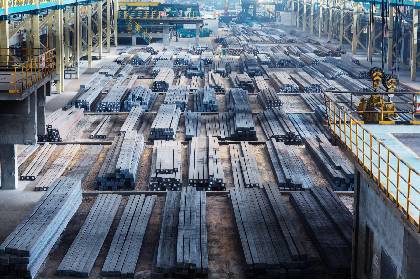
According to the OECD, world steel exports, excluding intra-EU and intra-ASEAN trade, fell by 6.2 percent in 2025 to 321.2 million mt, while China’s exports increased by 13.8 percent to 131.2 million mt, with the country’s steel exports more than doubling during the 2019-25 period.
The organization stated that China’s share of world steel exports rose from 19 percent in 2019 to 41 percent in 2025, indicating a major change in global trade flows, while exports from ASEAN also more than doubled over the same period to reach 20.8 million mt in 2025.
The OECD noted that the rise in Chinese export volumes was not matched by a comparable increase in export values, as export unit values fell sharply, while a similar pattern was observed in ASEAN, where export value growth also lagged volume growth.
OECD exporters lose ground in global steel markets
The OECD stated that OECD steel-producing economies have lost ground in global steel trade, with European exports falling by 53 percent from their 2019 level to 50 million mt in 2025, including a 19 percent year-on-year decline in 2025 alone.
North American steel exports fell to 14 million mt in 2025, down 20 percent from 2019, while South American exports declined to 12 million mt, representing an 18 percent decrease compared to 2019.
According to the report, the share of steel production that is exported has generally declined outside China, with Europe exporting 26 percent of its production in 2025 compared to 47 percent in 2019, while Asian countries excluding China saw their export share fall from 42 percent at the start of the decade to 30 percent in 2025.
The OECD also stated that steel imports shifted significantly in 2025, with North American imports falling by 15.8 percent amid stronger trade actions, while sharp declines were also recorded in Asia and the Middle East; however, imports increased in Europe, particularly in the EU-UK market, where semi-finished steel, which was not covered by safeguard measures, accounted for nearly half of the increase.
Steel prices diverge across major markets
The OECD said that steel prices diverged sharply across regions in 2025, with hot rolled coil and rebar prices rising in the United States and the EU at the beginning of the year and remaining at relatively high levels, while prices in China and other covered economies remained lower and largely steady.
In January 2026, prices for hot rolled coil and rebar were more than twice as high in the United States as in China, while EU prices were around 50 percent higher than Chinese prices, reflecting differences in regional demand conditions, import pressure and trade policy environments.
The OECD stated that China’s construction slowdown depressed domestic steel prices, especially rebar prices, compressing Chinese producers’ margins and encouraging mills to shift away from construction-linked long products toward flat products, a move that increased supply pressure in third-country flat steel markets and limited the likelihood of sustained steel price increases in the short to medium term.
Raw material costs squeeze margins
Steelmaking raw material prices were relatively stable in the first half of 2025 but increased gradually in the second half and into early 2026, with iron ore prices rising by 9 percent, coking coal by 17 percent and scrap by 2 percent for the full year.
As a result, the OECD stated that the price of a typical steelmaking raw material basket increased by 10 percent in 2025, while the margin between steel prices and raw material costs narrowed steadily from the spring of the year, adding further pressure to steelmakers’ profitability.
The organization said that profitability in the basic steelmaking sector remained weak in 2024, reflecting the impact of overcapacity on steel prices, while producers in partner economies improved their performance slightly and conditions in OECD member countries deteriorated further.
The OECD also noted that global steel producers increased leverage, reversing a decade-long deleveraging trend, while the median representative steel firm in partner economies had a debt-to-asset ratio more than 50 percent higher than that of its counterpart in OECD member countries, supported in part by direct grants and access to below-market finance.
The report indicates that global steel trade conditions will remain challenging, as high Chinese export volumes, weak prices in several markets, rising raw material costs, regional trade measures and shifting import patterns continue to reshape competition in the global steel industry.