Germany's National Steel Summit 2026 will take place on November 16 at Salzgitter AG's Information Center in Salzgitter, bringing together representatives of politics, steel companies, trade unions, industry associations and academia to discuss competitiveness, climate-neutral production and employment.
The event follows the steel summit hosted by Chancellor Friedrich Merz at the Federal Chancellery on November 6, 2025. That meeting brought together representatives of the steel industry, trade unions, steel-producing states and federal ministries, with discussions focused on foreign trade, energy and competitiveness. At the summit scheduled for November 16, Germany's steel-producing states, IG Metall and the German Steel Federation (WV Stahl) will discuss the political and economic conditions needed to secure domestic steel production and industrial value creation.
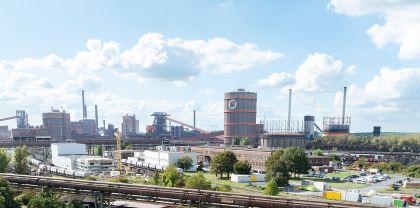
Competitive energy prices and low-emission steel markets among key priorities
The summit will focus particularly on competitive energy prices for energy-intensive industries and the development of lead markets for low-emission steel. Accordingly, German steelmakers face several challenges, including high energy costs, geopolitical tensions, growing trade conflicts, global overcapacity and intensified international competition, while undertaking substantial investments in new production processes and climate-friendly infrastructure.
Discussions will address how Germany can advance the transition toward climate-neutral steelmaking while maintaining competitiveness, industrial value creation and employment. The strategic importance of steel for mobility, infrastructure, housing, defense, the energy transition and mechanical engineering was also highlighted. The objective is to identify solutions and discuss the framework needed for a strong, sustainable and competitive German steel industry, while safeguarding its contribution to industrial supply chains and employment.
Ahead of the summit, IG Metall representatives at thyssenkrupp Steel Europe have outlined demands covering energy affordability, demand for low-emission steel and protection against unfair imports. The union has called for internationally competitive energy prices and reliable conditions for scaling up climate-neutral hydrogen, describing these as necessary to safeguard investment, industrial value creation and employment.