More than 100 European companies and investors have urged EU leaders to preserve the strength of the EU Emissions Trading System (ETS), warning that weakening the bloc’s carbon market could damage industrial competitiveness and slow the clean-industry transition.
In a joint letter addressed to EU heads of state and government ahead of the European Council summit due to be held on March 19-20, the companies said Europe’s industrial competitiveness remains under pressure and noted that the assessment presented in Mario Draghi’s competitiveness report continues to reflect the current economic environment.
The signatories include major steel producers such as Salzgitter AG, Tata Steel, Outokumpu, Saarstahl AG, SSAB, Hydnum Steel and Stegra.
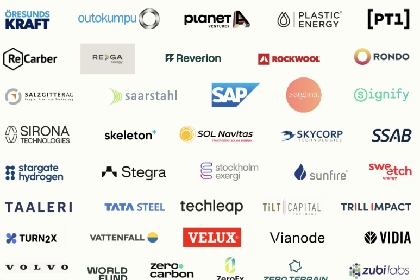
Industry stresses importance of foundational sectors
According to the signatories, Europe’s economic security depends on strengthening both foundational industrial sectors and emerging clean-technology industries.
They identified sectors such as steel, cement, chemicals, glass and aluminum as essential industrial pillars, alongside technologies including renewable energy, batteries, electrolyzers, electricity grids and energy-efficiency solutions.
Within this framework, the companies emphasized that the EU ETS remains a central mechanism supporting Europe’s transition toward a low-carbon industrial economy.
Companies warn against weakening ETS
The letter follows ongoing discussions within the EU about easing regulatory pressure on energy-intensive industries to address competitiveness concerns.
However, the signatories argued that targeting the carbon market itself would represent a misdiagnosis of the problem. They stated that the ETS has already stimulated billions of euros in low-carbon investments and continues to provide a critical market signal encouraging technological innovation and industrial decarbonization.
Weakening the system, they warned, could reduce investment certainty, penalize companies that have already invested in decarbonization technologies and weaken Europe’s position in emerging clean-industrial sectors.
Call for better use of ETS revenues
Rather than weakening the ETS framework, the companies urged policymakers to focus on improving its implementation during the next revision of the system. One key recommendation concerns the strategic use of ETS revenues. Although EU member states collect most of these funds, the letter argues that only a limited share is currently reinvested in industrial decarbonization projects.
The signatories therefore called for greater use of ETS revenues to support clean industrial development, particularly electrification.
Policy priorities for strengthening industrial competitiveness
The companies also highlighted several policy priorities aimed at strengthening Europe’s industrial competitiveness. These include expanding affordable clean electricity generation, investing in power grids and energy storage infrastructure, supporting long-term industrial power purchase agreements to stabilize energy costs and enabling companies to develop on-site renewable energy and storage solutions.
In addition, the signatories stressed the importance of ensuring the effective implementation of the Carbon Border Adjustment Mechanism and potentially extending it to additional sectors to prevent carbon leakage across supply chains.