Ahead of the European Commission’s review of the EU Emissions Trading System (ETS), the European Steel Association (EUROFER) has reiterated its support for the EU’s objective of achieving climate neutrality by 2050, while warning that the ETS can only deliver its intended results if it reflects market realities and is accompanied by the necessary conditions to support industrial decarbonization.
EUROFER stated that the European steel industry has already committed billions of euros to decarbonizing its operations and remains fully committed to supporting the EU’s climate objectives. According to the association, steelmakers have already taken investment decisions covering around 35 million mt of new low-carbon steelmaking capacity by 2033. However, it noted that many of the enabling conditions promised to the industry have yet to materialize.
Enabling conditions remain insufficient
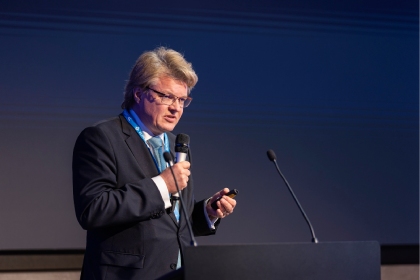
“The European steel industry is ready for deep decarbonization, but the EU and most member states are not. It is an illusion to think the steel industry can be carbon neutral by the end of 2033 based on the current ETS and CBAM frameworks alone. Without affordable clean electricity, hydrogen infrastructure and greater scrap access, the transition cannot happen at the pace envisaged,” Axel Eggert, director general of EUROFER, said.
The association pointed out that electricity prices remain around twice the level required for European industry to compete internationally, while renewable hydrogen remains scarce and costs several times more than the target price of €2/kg. In addition, carbon leakage risks continue to affect both domestic and export markets, including downstream sectors. As a result, EUROFER stated that 10-15 million mt of planned low-carbon steelmaking capacity has already been delayed or put on hold due to the weakening investment case.
Call for broader ETS reform package
EUROFER stressed that although the ETS remains the cornerstone of the EU’s climate policy and a key driver of investment, carbon pricing alone cannot deliver industrial transformation. It stated that the ETS review should therefore be accompanied by internationally competitive electricity prices of around €50/MWh, affordable renewable hydrogen, effective carbon leakage protection, stronger lead markets, increased public funding and greater availability of ferrous scrap.
“The ETS must continue to reward companies investing in decarbonization while ensuring Europe remains an attractive place to manufacture,” Eggert said. “The European Steel and Metals Action Plan points in the right direction, but it must now be fully implemented. The promise to make 20 million mt of clean hydrogen available by 2030 looks clearly unachievable today, and the revision of electricity markets has been a lost opportunity. Why is a fossil-fuel power plant still setting electricity prices when renewable electricity is already cheaper? Unless these structural flaws are addressed, the ETS risks reducing emissions through deindustrialization rather than through investment and innovation.”
Slower free allocation phase-out and greater ETS reinvestment
Against this background, EUROFER called for a significantly slower phase-out of free ETS allowances for CBAM sectors from 2028 onwards, particularly during the 2030-32 period, arguing that the necessary conditions for the transition have not yet been established across many parts of Europe.
The association also called for the current methodology governing the hot metal benchmark to be extended beyond 2030 in order to provide greater predictability for companies investing in low-carbon steelmaking and to encourage investment in hydrogen-ready technologies such as direct reduced iron (DRI). In addition, EUROFER reiterated the need for a structural export solution covering both CBAM sectors and downstream industries to preserve the global competitiveness of European producers while preventing carbon leakage.
Finally, EUROFER urged that a significantly larger share of ETS revenues be reinvested in industrial decarbonization. According to Eggert, less than five percent of ETS auction revenues managed by member states are currently invested in industrial decarbonization. He stated that if Europe wants to accelerate the transition, a much larger proportion of those revenues must be directed back to the sectors making the necessary investments.