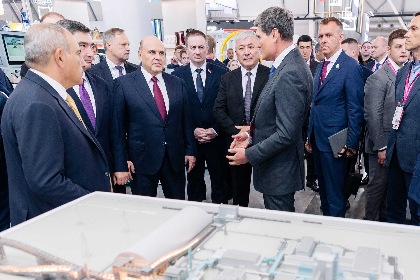
Russia-based Ecolant has announced that it has presented its green steel project at the Innoprom exhibition in Yekaterinburg. The plant, currently under construction in Vyksa, Nizhny Novgorod region, is scheduled to begin operations in the fourth quarter of 2026.
According to the company, the project will become the first steel plant in Russia to use direct reduced iron (DRI) technology combined with electric arc furnace (EAF) steelmaking on this scale. The facility will produce steel from DRI pellets using natural gas, with carbon dioxide and sulfur oxide emissions expected to be nearly three times lower than those generated through conventional blast furnace-converter production.
Plant to produce 1.8 million mt of steel annually
The plant will have an annual production capacity of 1.8 million mt of steel and will manufacture round billets (blooms) and slabs. Most of the semi-finished products will be used to produce high-grade steel products for the oil and gas, transport and machinery sectors.
According to Anatoly Sedykh, the project utilizes Russia’s abundant reserves of high-quality iron ore and natural gas, enabling the production of steel with a low environmental footprint and competitive production costs. He stated that the use of 100 percent hot metallized pellets with low sulfur and phosphorus content allows the production of cleaner steel suitable for complex high-alloy grades.
Project to boost domestic raw material consumption
The project is expected to increase domestic consumption of approximately 1 billion cubic meters of natural gas and 3.5 million mt of iron ore pellets annually. Once operating at full capacity, Ecolant is expected to contribute around RUB 6.4 billion in annual tax revenues and create more than 1,000 highly skilled jobs. The total investment in the project amounts to RUB 190 billion ($2.49 billion).
Ecolant will operate without coke ovens, blast furnaces or converter steelmaking, using an integrated production chain in which hot DRI pellets will be continuously supplied to the electric arc furnace, followed by secondary metallurgy and two continuous casting machines. The company stated that the use of high-quality DRI pellets with low impurity levels will enable the production of cleaner steel than currently produced in Russia.