Unionized workers at Australian miner BHP's Port Hedland iron ore operations in Western Australia have returned to work following 48 hours of industrial action, although the company and unions remain divided over the extent of the disruption caused by the strike, according to Australian media reports.
Members of the Electrical Trades Union (ETU), Australian Manufacturing Workers' Union (AMWU) and Australian Workers' Union (AWU) stopped work over the weekend as part of a months-long dispute with BHP over pay and working conditions. Union representatives claimed that almost all eligible employees participated in the industrial action and that three of BHP's iron ore loaders operated at significantly reduced capacity. BHP, however, stated that around 20 employees participated in protected industrial action on Saturday and 90 on Sunday, maintaining that vessels continued to be loaded and departed according to schedule.
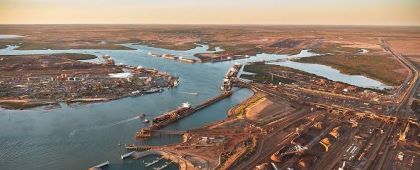
Port Hedland vessel movements continued
According to port operator Pilbara Ports, the industrial action was not expected to have an impact on its broader operations. Four vessels departed Port Hedland on Saturday, followed by another four on Sunday, while three additional bulk carriers were expected to depart on Monday
The unions nevertheless argued that the 48-hour stoppage caused greater disruption than the eight-hour industrial action held in July. ETU state secretary Adam Woodage said recent negotiations had begun to identify a potential pathway toward resolving what the union considers uneven and extreme employment conditions.
Mining industry warns of productivity impact
Western Australia's Chamber of Minerals and Energy acknowledged that BHP had maintained production during the industrial action but said additional resources were required to manage the disruption, resulting in a productivity impact. The organization also warned that prolonged industrial disputes could negatively affect the Pilbara region's attractiveness to investors, highlighting the importance of reaching a resolution.
BHP and union representatives are scheduled to return to the Fair Work Commission next week for their 12th meeting since negotiations began. The miner has committed to presenting an updated proposal and said its approach is intended to provide greater consistency in employee pay while maintaining industry-leading wages and employment conditions. The dispute is particularly significant given Port Hedland's position as Australia's largest bulk export port and its critical role in the country's iron ore export supply chain.