Australian mining company BHP and the Global Centre for Maritime Decarbonization (GCMD) have announced that they have launched a pilot project aimed at reducing greenhouse gas emissions from maritime transport through the use of blended biofuels derived from waste-based feedstocks.
The initiative focuses on testing marine fuel blends produced from used cooking oil (UCO) and waste animal fats, commonly known as tallow. The trial is designed to evaluate the operational performance of these fuels under commercial shipping conditions while utilizing existing bunkering infrastructure.
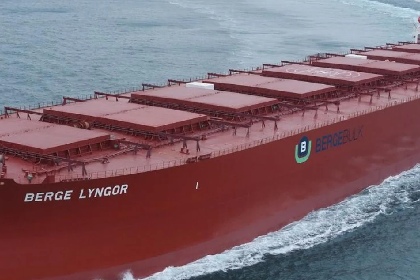
Iron ore carrier selected for real-world testing
The pilot is being conducted aboard the Berge Lyngor, a bulk carrier owned and operated by Berge Bulk and chartered by BHP. The vessel is using the blended biofuel while transporting iron ore from Western Australia to China, allowing project partners to assess fuel handling, blending processes, operational reliability and traceability systems in a real-world environment.
According to BHP and GCMD, the use of the waste-based biofuel blend could reduce well-to-wake greenhouse gas emissions by approximately 79 percent per voyage compared with conventional very low sulfur fuel oil (VLSFO).
Waste animal fats could expand future biofuel supply
One of the key objectives of the project is to evaluate alternative feedstocks that can complement the growing use of used cooking oil in biofuel production.
The maritime industry currently relies heavily on UCO-based biofuels, but future supply growth may be constrained by limited feedstock availability. Waste animal fats are increasingly being viewed as a viable supplementary feedstock that could help expand production capacity for lower-carbon marine fuels. By testing a blend of multiple waste-derived feedstocks, the project aims to demonstrate how more diversified biofuel supply chains could support the shipping industry's decarbonization efforts.
Pilot to examine operational and technical challenges
In addition to emissions reductions, the trial will assess several operational considerations associated with blended biofuels. Project participants will monitor potential issues such as oxidation-related corrosion and wax formation, both of which could affect vessel fuel systems and long-term operational performance.
The pilot will also evaluate traceability and verification systems designed to ensure accurate emissions reporting and transparency throughout increasingly complex marine fuel supply chains. This is becoming particularly important as biofuel blends incorporate multiple feedstocks with different lifecycle carbon footprints.
According to the project partners, the trial is expected to provide valuable insights into how blended biofuels can be integrated into existing maritime fuel networks without requiring major infrastructure modifications. The results may also help shipowners and cargo operators gain greater flexibility when selecting marine fuels based on availability, cost and carbon intensity.