Luxembourg-based ArcelorMittal has announced that it has supplied XCarb® recycled and renewably produced steel for Germany-based Daimler Truck’s reECONIC concept vehicle, a project designed to demonstrate how circular economy principles can be integrated into commercial vehicle manufacturing.
The initiative, led by Daimler Truck AG in collaboration with FAUN and 33 partners across the automotive value chain, focuses on increasing recycled material usage and reducing embedded carbon emissions in trucks.
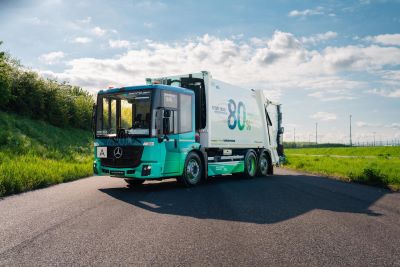
Project targets circular truck manufacturing
The reECONIC concept aims to maximize the use of recycled and sustainable materials while maintaining the durability, safety and performance standards required for heavy-duty commercial vehicles.
The project highlights how circular design and responsible material sourcing can contribute to lower-carbon mobility alongside vehicle electrification.
XCarb® steel used in structural truck components
Within the project, ArcelorMittal supplied:
- S500MC XCarb® steel for chassis rails
- S355MC XCarb® steel for body components and waste container structures
The company stated that these applications demonstrate that low-carbon steel can already be integrated into safety-critical vehicle structures using existing industrial manufacturing processes.
According to the company, XCarb® products are backed by at least 75 percent recycled content, and 100 percent renewable electricity usage during EAF steelmaking. Compared to conventional blast furnace steel production, these products significantly reduce embedded carbon emissions.
Existing production systems can support circularity
A key conclusion of the reECONIC project is that more circular truck production does not necessarily require entirely new manufacturing systems.
According to ArcelorMittal, advanced low-carbon steel grades can be integrated into existing stamping, forming, and vehicle assembly processes.
The reECONIC project reflects broader changes in the automotive industry as manufacturers seek to reduce Scope 3 emissions, improve material circularity, lower embodied carbon, and comply with tightening climate regulations.