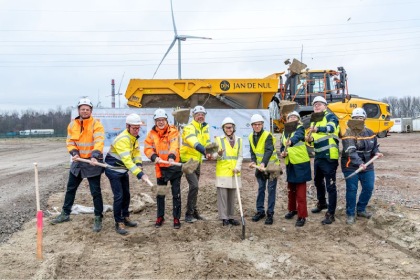
ArcelorMittal Belgium has announced that construction of its Baekeland high-voltage substation has officially begun, marking a significant step toward electric and low-carbon steel production.
The facility is designed to receive electricity via high-voltage cables and overhead lines and transform it into voltage levels suitable for large industrial consumers. Once operational, it will become a key node in the Belgian electricity grid, strengthening power supply to the port area and surrounding industrial sites.
Key role in Belgium’s energy transition
The Baekeland substation is expected to play a central role in supporting the regional energy transition. From 2030 onwards, ArcelorMittal Belgium will be the first company to be directly connected to the high-voltage grid.
For ArcelorMittal Belgium, the project is a critical enabler of its decarbonisation strategy. The planned transition toward electric steelmaking, including future electric arc furnace (EAF) operations, requires substantially higher electricity volumes than can be delivered through the company’s existing 150 kV connection.
To address this constraint, ArcelorMittal Belgium signed an agreement with Belgian transmission system operator Elia to secure access to the 380 kV high-voltage grid. This new connection will provide the capacity needed to operate electric steelmaking facilities and reduce the carbon intensity of steel production.
With construction works now under way, the Baekeland high-voltage substation is scheduled to enter operation in 2030, aligning with ArcelorMittal Belgium’s longer-term roadmap for electric, low-emission steel production.