Kerem Çakır, general manager of Turkish steelmaker Borçelik Çelik Sanayi Ticaret A.Ş., has stated that the company operates a flat steel production capacity of approximately 1.5 million mt, positioning it as a strategic supplier to the Turkish manufacturing industry, according to local media reports.
Cold rolled products are mainly used in radiators and household appliances such as refrigerators and washing machines, while galvanized steel is predominantly consumed by the automotive sector, particularly for vehicle body components. The company has also expanded its portfolio to include advanced steel grades such as commercial, deep-drawing, dual-phase, bake-hardening, rephosphorized and HSLA steels.
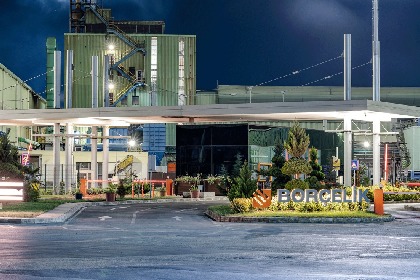
Production structure and service center integration
According to Mr. Çakır, Borçelik operates around 600,000 mt of cold rolled capacity and approximately 900,000 mt of galvanized capacity annually, forming one of Turkey’s highest-quality flat steel production bases.
These operations are supported by Kerim Çelik’s steel service center, which provides roughly 500,000 mt of additional processing capacity. Combined, Borçelik manages close to 2 million mt per year across production, processing and delivery, supported by an end-to-end, technology-driven and customer-oriented operating model.
Export footprint and downstream reach
Borçelik exports directly to 36 countries, primarily across the European Union, the Balkans and North America. In addition, the automotive, white goods, radiator and HVAC sectors supplied by the company typically have export ratios of around 75 percent.
As a result, Borçelik’s steel also reaches global markets indirectly through finished products. When direct and indirect exports are combined, around 80 percent of the company’s total output ultimately serves international markets. Çakır noted that Borçelik steel is used in nine out of ten cars manufactured in Turkey, as well as in nearly all major household appliances produced domestically.
Digitalization and artificial intelligence strategy
On digital transformation, Çakır underlined that artificial intelligence is viewed as a tool to reinforce human expertise rather than replace it. AI applications are focused on delivering measurable improvements, including higher production efficiency, consistent product quality, optimized energy and resource use, and improved workplace safety and ergonomics.
Investment priorities and green transition
Borçelik’s medium-term strategy is built on three core pillars: quality, digital transformation and green transition. Planned investments include efficiency and surface-quality upgrades to galvanized lines, broader deployment of AI-based quality control systems, energy optimization and automation.
The company is also progressing toward lower-carbon production, with renewable energy projects such as solar and wind power under consideration. These initiatives are complemented by efforts to increase energy efficiency and expand the use of lower-emission raw materials.