Swedish specialty steelmaker SSAB has announced that it is collaborating with German multinational building materials company Heidelberg Materials to develop electric arc furnace slag (EAF slag) into an alternative binder in cement.
The project aims to convert EAF slag into a supplementary cementitious material, offering a lower-carbon alternative to traditional cement components and helping reduce emissions in the construction sector.
The initiative has secured more than SEK 20 million ($2.18 million) in funding from the Swedish Agency for Economic and Regional Growth, supported by the Just Transition Fund and national co-financing.
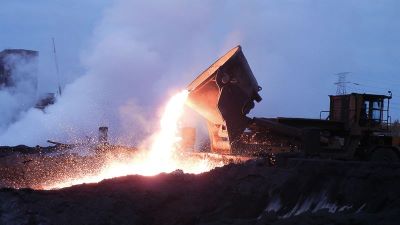
Research to move from lab to industrial scale
The four-year program will focus on optimizing slag processing methods and evaluating performance in cement and concrete applications, progressing from laboratory studies to pilot-scale testing.
The goal is to develop an industrially scalable solution that can be integrated into future construction materials.
Supports transition to electric arc furnace production
The initiative is aligned with SSAB’s transition to electric arc furnace-based steel production, with planned start-ups in Oxelösund in 2027, Luleå in 2029 and later in Raahe, Finland.
The companies stated that developing applications for EAF slag is part of broader efforts to support circular economy practices and reduce the carbon footprint of steel and construction materials.
Heidelberg Materials and SSAB have an established partnership, including the use of steel slag in cement production at the Slite plant in Sweden. The new project is expected to further strengthen this cooperation while supporting the development of low-emission construction materials.