South Korean steelmaker POSCO has announced that it has signed a memorandum of understanding with shipbuilder Hanwha Ocean to develop and test the use of high-manganese steel in cargo tanks for large liquefied natural gas (LNG) carriers, expanding the material's application beyond LNG fuel tanks.
Under the agreement, the companies plan to construct a demonstration vessel equipped with high-manganese steel LNG cargo tanks and evaluate their safety, durability and operational efficiency under actual operating conditions. The trials are intended to establish an operational track record to support the commercialization of the technology and its adoption by international shipowners.
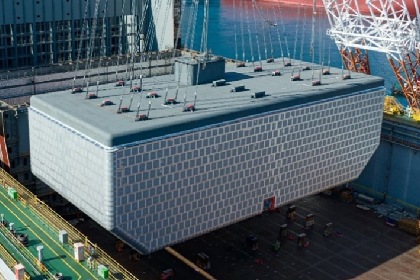
High-manganese steel offers advantages for cryogenic LNG storage
Developed using POSCO's proprietary technology, high-manganese steel maintains high strength and impact toughness at cryogenic temperatures of minus 163°C or below. The material offers cost and supply advantages compared to nickel alloy steel, particularly INVAR, which is commonly used in conventional LNG cargo tanks.
The company noted that expanding the material's application to LNG carrier cargo tanks represents a significant increase in potential steel demand. While LNG fuel tanks require approximately 1,000 mt of steel per vessel, LNG carrier cargo tanks can require more than 10,000 mt.
Following the planned LNG cargo tank demonstration, POSCO and Hanwha Ocean intend to expand the material's application to other LNG-related infrastructure, including LNG bunkering vessels and floating storage and regasification units. The companies also plan to explore the use of high-manganese steel in cryogenic transportation applications involving hydrogen, ethane and ammonia.