Japanese steelmaker Kobe Steel has announced that it reduced carbon emissions from its production processes by 23 percent in fiscal year 2025 compared with fiscal year 2013, according to its ESG Data Book 2026.
The company is targeting a 30 percent reduction by fiscal 2030 and carbon neutrality by 2050. Kobe Steel's energy-related Scope 1 and Scope 2 emissions totaled 14.9 million mt of carbon dioxide in fiscal 2025, comprising 14.1 million mt of Scope 1 emissions and 0.8 million mt of Scope 2 emissions. The total decreased from 15.4 million mt in fiscal 2024 and 15.5 million mt in fiscal 2023. More than 90 percent of the group's emissions originate from steelmaking.
Total energy consumption decreased to 178 PJ from 183 PJ in the previous fiscal year, while production-based energy intensity remained broadly unchanged at 28.6 GJ/mt. Production-based CO2 intensity was also stable at approximately 2.4 mt of carbon dioxide per mt of production. Meanwhile, Kobe Steel's reported Scope 3 emissions declined to 24.1 million mt of CO2 equivalent, from 26.0 million mt in fiscal 2024, with purchased goods and services accounting for approximately 5.0 million mt.
Hydrogen and HBI technologies remain key to steel decarbonization
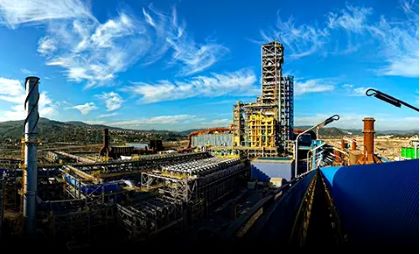
Steelmaking remains the main focus of Kobe Steel's decarbonization efforts. The group is participating with other Japanese steelmakers in a project supported by Japan's NEDO Green Innovation Fund to develop hydrogen-based blast furnace reduction, the use of direct reduced iron in electric arc furnaces and technologies for removing impurities from steel scrap.
Kobe Steel stated that it has demonstrated an approximately 25 percent reduction in blast furnace carbon emissions by charging large quantities of hot briquetted iron produced using the MIDREX process. Its pathway towards its fiscal 2030 targets includes combining HBI use with biomass, while scrap-melting furnaces and EAF capacity are also being considered for the longer term. Development of MIDREX H2, which is designed to produce direct reduced iron using 100 percent hydrogen, is also continuing. During fiscal 2025, Kobe Steel invested approximately JPY 1.2 billion ($7.61 million) in climate and energy efficiency projects and spent around JPY 8.5 billion ($53.92 million) on climate-related research and development.
The group estimated that its products and technologies contributed to avoiding 67.42 million mt of carbon emissions in fiscal 2025, up from 62.35 million mt in the previous year. The MIDREX process accounted for the majority of the avoided emissions. Kobe Steel aims to increase this contribution to 78 million mt by fiscal 2030 and more than 100 million mt by 2050.