The International Trade Centre (ITC), in partnership with Kazakhstan’s trade development agency QazTrade, has presented a report evaluating the readiness of Kazakhstan’s aluminum, iron and steel sectors for compliance with the European Union’s Carbon Border Adjustment Mechanism (CBAM).
Developed under an EU-funded project, the study assesses the potential impact of CBAM on Kazakhstan’s exporters and outlines measures to support their transition to lower-carbon production and reporting practices.
Zhanel Kushukova, Deputy Minister of Trade and Integration of Kazakhstan, stated that the EU accounted for approximately 31 percent of Kazakhstan’s foreign trade and around 44 percent of its exports by the end of 2025.
Report outlines compliance roadmap
The report examines the implications of CBAM for Kazakhstan’s aluminum, iron and steel industries and provides a phased compliance roadmap aimed at helping exporters adapt to evolving sustainability requirements. Recommendations include improving emissions reporting practices, strengthening cooperation with European customers and enhancing competitiveness in the EU market.
According to the assessment, Kazakhstan’s aluminum, iron and steel sectors are likely to face increasing reporting and compliance obligations as CBAM develops, highlighting the importance of early preparation and alignment with international emissions verification and reporting standards.
Johannes Baur, head of cooperation at the EU Delegation to Kazakhstan, stated that stronger transparency and sustainability reporting could help Kazakhstan’s exporters remain competitive in changing international markets. He emphasized the importance of continued cooperation among government institutions, businesses and international partners.
QazTrade Deputy Director General Nurlan Kulbatyr said Kazakhstan has already begun efforts to help industrial exporters adapt to the EU’s new requirements, with the aim of minimizing compliance costs while maintaining competitiveness in the EU market.
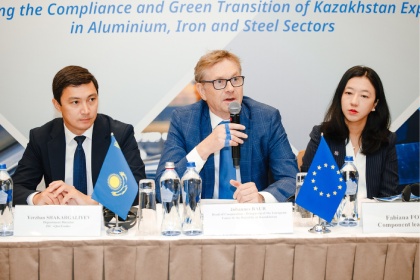
Steel sector expected to face the largest impact
According to Joost Pauwelyn, ITC international expert and lead author of the report, Kazakhstan currently exports more than €600 million worth of steel and aluminum products to the EU each year. The assessment indicates that reliance on default CBAM emissions values could generate more than €100 million in annual CBAM-related costs. Around 90 percent of this impact would be concentrated in steel bars and rods, where estimated CBAM costs could exceed product values by 123 percent.
Pauwelyn stated that these costs could be significantly reduced through measures such as monitoring and reporting actual emissions, accrediting local verifiers, reducing emissions at production facilities and strengthening domestic carbon pricing mechanisms.