The decarbonization plan for the former Ilva steel plant in Taranto in southern Italy has taken a further step forward thanks to the industrial test facility hosted at the Hydra site in Castel Romano (Rome). During industry minister Adolfo Urso’s visit to the site, Italy’s low-carbon steelmaking project received a concrete signal of acceleration.
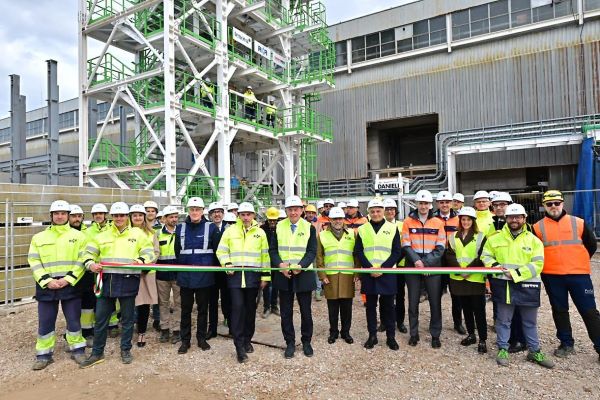
Hydra, developed by the RINA group, is a mini-mill designed to test the use of hydrogen across all stages of steel production. The core of the project is the production of direct reduced iron (DRI) using hydrogen - material that can feed electric arc furnaces, an essential requirement for the full decarbonization of the Taranto plant. According to Urso, the outcome of Hydra will have “a direct impact on the relaunch of the group and of the Taranto site.”
Hydra is a €110 million project approved by the European Commission and Italy’s Ministry for Enterprise, involving a multidisciplinary team of around 120 engineers, and includes a dedicated training hub focused on hydrogen storage and utilization.
The framework agreement for the Taranto site
At the end of August 2025, a draft agreement on the full decarbonization of the former Ilva facilities was signed at the Ministry for Enterprise and Made in Italy (MIMIT) by all national and local authorities. The agreement provides for the shutdown of coal-based hot-end operations and the conversion to low-impact electric melting technologies. However, the draft does not yet specify a timeline for the transition nor the definitive location of the DRI hub required to supply pre-reduced iron.
The plan, described as “a new chapter” by the president of the Apulia Region, Michele Emiliano, marks “a turning point awaited for ten years” for the Italian steel industry.
Hydra’s strategic relevance for Taranto
The developments launched through Hydra are significant as they provide a concrete, open-innovation platform for the entire national steelmaking sector. In the absence of a dedicated DRI hub already in operation in Taranto (or of a final decision on its location), the mini-mill at Castel Romano emerges as a key testbed to demonstrate a scalable and fully green production model.
As previously reported by SteelOrbis, the transition to electric arc furnaces in place of coal-fired blast furnaces is viewed as the cornerstone for ensuring the plant’s environmental sustainability and for safeguarding employment.
However, the lack of a confirmed site for the DRI hub and uncertainties regarding the conversion schedule continue to weigh on the process. In this context, the results achieved at Hydra will be closely monitored by industry operators, institutions and potential investors, as they may prove decisive for the credibility of the entire plan.