The European Steel Association (EUROFER) has stated in its position paper that the proposed Industrial Accelerator Act (IAA) is an important step toward supporting industrial decarbonization and creating lead markets for low-carbon steel in Europe. However, the association warned that the current proposal does not go far enough to guarantee demand for low-carbon steel produced within the EU.
A central criticism focuses on the proposed origin criteria. According to EUROFER, relying on standard EU customs rules based on the “last substantial transformation” would allow imported semi-finished products such as slabs or hot rolled coil to qualify as EU-origin after limited downstream processing within Europe. The association argues this could weaken the intended demand-pull effect for domestically produced low-carbon steel.
Mandatory EU-origin requirements proposed
EUROFER is calling for mandatory Union-origin rules for low-carbon steel used in public procurement and public support schemes.
Specifically, the association wants requirements tied to steel “originally melted and poured” within the EU.
Imports could still dominate lead markets
The association highlighted that more than 75 percent of EU steel imports come from countries with free trade agreements with the EU. As a result, products from nearly 80 countries could potentially qualify as “Made in EU” under the current proposal.
EUROFER warned that this could enable non-EU producers to maintain access to EU lead markets through limited processing activities in countries such as Morocco, Turkey, or Serbia.
Demand requirements seen as insufficient
The paper also argues that the proposed low-carbon steel requirements are too limited to generate meaningful demand.
Since public procurement represents less than five percent of total steel demand, EUROFER believes the Commission’s proposed 25 percent threshold would not provide a sufficient market signal. The association therefore proposed increasing the requirement to at least 50 percent low-carbon steel of Union origin.
Expansion to additional sectors requested
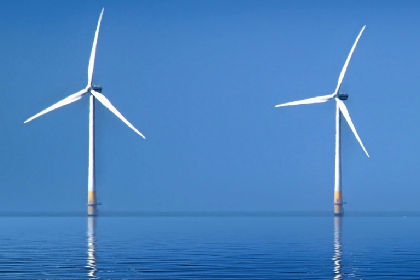
EUROFER called for the IAA scope to be extended to sectors covered by the Net-Zero Industry Act (NZIA), including wind power, solar energy, electric vehicles, electric motors, and electrical steels used in transformers. The association believes these sectors are well suited for early low-carbon steel adoption.
Regarding wind energy, EUROFER criticized the Commission’s proposed component-counting methodology. The association argued that manufacturers could still import high-value components while sourcing only low-value parts from Europe. Instead, EUROFER proposed a value-based requirement under which at least 60 percent of the value of each major component originates in the EU.
For electric vehicles, EUROFER supported EU local-content provisions but called for tighter requirements. The association proposed increasing local-content thresholds for e-powertrain components based on non-grain-oriented electrical steel from 50 percent to 80 percent to prevent compliance through simple assembly operations.
Preference for mandatory carbon labeling
EUROFER also supported mandatory greenhouse gas labeling under broader EU product regulations rather than a voluntary label under the IAA. According to the association, labeling systems should rely on verified and comparable emissions data.
The association further called for expanded foreign direct investment screening in strategic sectors such as wind components and electrical steel. EUROFER warned that growing dependence on non-market-economy suppliers could weaken Europe’s industrial base if not properly addressed.