According to Australian miner BHP, steel remains one of the world’s most important materials, with nearly 2 billion mt produced annually. More than 70 percent of global steel production is currently based on the blast furnace-basic oxygen furnace (BF-BOF) route, while most of the remainder is produced via the electric arc furnace (EAF) route.
BHP stated that its steel decarbonization program supports multiple technology pathways and highlighted the modified blast furnace route as a key option for reducing emissions. This pathway retains the conventional BF-BOF production process while combining technologies such as top gas recycling, hydrogen injection and carbon capture, utilization and storage (CCUS) to achieve substantial emissions reductions.
Blast furnaces to remain central to steel production
The company said blast furnace decarbonization remains technically complex, capital intensive and at an early stage of commercialization, making collaboration essential. BHP is working with steelmakers, technology companies and research institutions to accelerate development through pilot projects and pre-commercial demonstrations.
BHP noted that the BF-BOF route remains dominant because it is cost-effective, flexible and capable of processing a wide range of iron ore grades while producing both commodity and specialty steels. In contrast, the EAF route depends on scrap or direct reduced iron (DRI), with only around three percent of globally traded seaborne iron ore meeting the quality requirements for DRI production, according to Wood Mackenzie.
The company also pointed to the long operating life of blast furnaces, noting that a new integrated steel plant may cost around $4 billion and operate for several decades. Nearly 85 percent of the cumulative blast furnace capacity in China and India is less than 20 years old, while additional blast furnace projects continue to be announced, particularly in India and Southeast Asia. BHP said many DRI-based projects, especially in Europe, have experienced delays because of economic uncertainty, high costs and slow policy progress.
Technologies for deeper emissions reductions outlined
According to BHP, discussions with customers indicate that initial emissions reductions are likely to come from the use of higher-quality raw materials, energy efficiency improvements and other proven technologies. The company estimates these optimization measures could reduce blast furnace emissions intensity by up to 20 percent.
Beyond these measures, BHP said deeper emissions reductions will require technologies such as top gas recycling, which captures carbon dioxide from blast furnace gas while recycling carbon monoxide and hydrogen back into the furnace to reduce coal consumption. Demonstration projects under the ULCOS program in Europe and China Baowu’s HyCROF technology have reported emissions intensity reductions of 24-37 percent, which can exceed 60 percent when combined with carbon storage and approach near-zero emissions when supplemented by post-combustion carbon capture and renewable energy.
BHP explained that carbon capture can also be applied after combustion in the steel plant’s power and heat generation systems. While post-combustion capture is based on commercially established technologies used in other industries, it does not improve blast furnace efficiency. The company estimates carbon capture costs at approximately $40-100 per mt of CO₂, with additional investment required for transport, utilization or permanent storage of captured carbon dioxide.
Partnerships to support commercialization
The miner noted that nine of the world’s ten largest steel producers are incorporating CCUS into their decarbonization strategies through pilot projects, demonstrations and research. However, BHP said further technical validation, cost optimization and supporting infrastructure, including carbon transport, storage, policy frameworks and carbon markets, are still required before widespread commercial deployment.
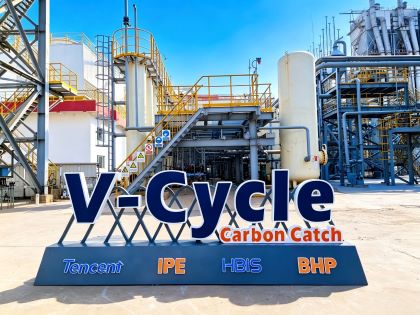
BHP said it is working with partners including ArcelorMittal, Mitsubishi Heavy Industries, Mitsubishi Development, HBIS, Carbon Clean and JSW Steel to evaluate carbon capture technologies for blast furnace applications. It is also participating in studies on shared CCUS infrastructure to support the development of system-wide carbon capture and storage solutions.
Looking ahead, BHP said it expects the blast furnace to remain a major steelmaking route for decades and considers reducing its emissions intensity essential for meeting climate objectives while maintaining global steel production. The company stated that it will continue supporting multiple decarbonization pathways through partnerships, technology development and the supply of higher-quality iron ore and steelmaking coal.