The Turkish merchant bar market continues to see changes in the US dollar-Turkish lira exchange rate reflected in selling prices. Coming just before the Feast of Sacrifice holiday, which is expected to influence demand levels both in the Turkish domestic market and the Middle Eastern market, the price hike attempts of Turkish rolling mills appear remarkable. Increased domestic billet prices are seen to be among the reasons for this price increase attempt.
Local Turkish buyers continue to purchase only to meet their urgent needs. Turkish rolling mills adjusted their merchant bar export offers in line with movements in the euro-dollar exchange rate, just after the latest announcement made by the US Federal Reserve (FED).
As regards Turkey's merchant bar export markets, the Middle East market remains quiet before the Feast of Sacrifice holiday, as do the North African markets. Some buyers, being unable to predict how long Turkish rolling mills' export offers will remain at current levels, are adopting a wait-and-see stance in the hope that offer levels may indicate some softening in the coming period.
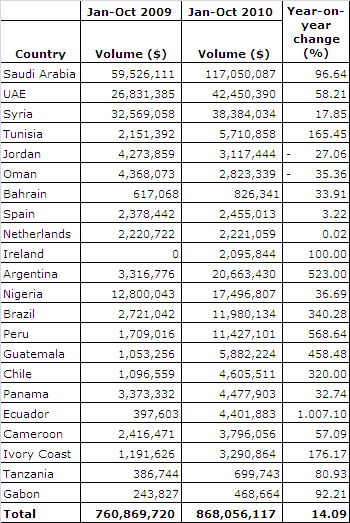
Turkey's steel export data provided by the Istanbul Mineral and Metals Exporters' Association (IMMIB) show that, in the first ten months of this year, there has not been any significant change in Turkey's merchant bar exports to Europe on year-on year basis. In the Middle East, Saudi Arabia remains one of Turkey's key merchant bar export markets, while Turkey's merchant bar export volumes to Argentina, Peru, Chile, Equator, Guatemala and Panama show significant year-on-year increases, indicating the attempts of Turkish suppliers to switch their exports to the livelier American and Central/West African markets, due to the general stagnancy in the international markets.