UK industry groups have warned in an interview with the Financial Times that the government’s planned carbon border tax, due to take effect in January 2027, is fundamentally flawed and risks accelerating deindustrialization rather than supporting decarbonization.
The steel, cement and chemicals sectors argue that the UK Treasury has failed to address repeated concerns from industry and is designing a system that could leave domestic producers worse off than overseas competitors.
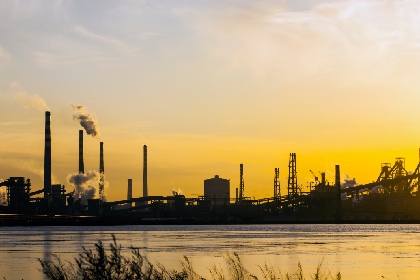
Steel sector warns of distorted competition
According to the UK-based trade association UK Steel, the current structure of the UK carbon border mechanism would favor imports over domestic production and undermine investment decisions in low-carbon technologies.
Frank Aaskov, director of climate change policy at UK Steel, said the government was ignoring evidence-based warnings from industry and knowingly steering the country toward industrial decline. Similar concerns have been raised by the Mineral Products Association, representing the cement sector, and the Chemical Industries Association, which covers fertilizer manufacturers.
Divergence from EU CBAM model
The UK scheme follows the European Union’s Carbon Border Adjustment Mechanism (CBAM), which entered into force in January 2026 and applies to imports of iron and steel, cement, aluminum, fertilizers, electricity and hydrogen.
While both systems aim to prevent carbon leakage and protect producers that pay for their emissions, industry groups argue that the UK approach diverges in problematic ways. Unlike the EU system, which differentiates carbon charges by product type and country of origin, the UK Treasury plans to apply a single average emissions rate per sector.
Industry bodies warn that this approach would allow high-carbon imports to underpay for their true emissions, distorting competition and failing to ensure fair carbon pricing.
Export exposure and dumping risks highlighted
Another major concern is that the UK CBAM offers no protection for exports. While the EU has introduced measures to support EU producers exporting to markets without carbon pricing, the UK has not. The Chemical Industries Association described this gap as an existential issue for export-oriented sectors.
In addition, the one-year gap between the start of the EU and UK CBAMs is seen as creating a strong incentive for dumping, with global producers potentially redirecting steel, cement and fertilizer shipments to the UK to avoid EU carbon charges.
Early signs of market distortion
Industry representatives say there are already signs of market distortion ahead of implementation. Some traders are reportedly structuring deals to invoice imports before the UK CBAM starts, with payment deferred until later, in order to avoid the tax.
Cement producers, including Heidelberg Materials UK, support the principle of a carbon border tax but argue that, in its current form, the UK system would still leave domestic manufacturers at a disadvantage to producers in countries such as Turkey or Algeria, where energy costs are significantly lower.
Treasury defends policy, calls for post-launch review
While acknowledging design challenges, the trade association for the energy industry Energy UK said a carbon border tax remains essential for the green transition and for protecting UK industry from unfair international competition, provided existing flaws are corrected.
The UK Treasury has defended the policy, stating that the UK CBAM will ensure imported carbon-intensive goods face a comparable carbon price to that paid by British producers. It added that the government will continue engaging with industry and will review the scheme once implemented to ensure decarbonization is achieved in a fair and managed way.