Taiwanese President Lai Ching-te has announced that the government is planning to introduce its own Carbon Border Adjustment Mechanism (CBAM) and a carbon emissions trading system (ETS) as part of its efforts to achieve net-zero emissions by 2050 and strengthen the international competitiveness of domestic industries.
Speaking at a meeting with the winners of the 8th National Corporate Environmental Protection Awards and outstanding environmental protection professionals on November 2, Lai stated that the government would continue working with industrial companies and other stakeholders to support Taiwan's green transition.
According to the president, Taiwan has already implemented its carbon fee system, while preparations are underway for a Taiwanese version of CBAM and an ETS. Lai emphasized that these measures are intended to help domestic industries align with international carbon regulations, strengthen their resilience and improve their competitiveness during the transition toward lower-carbon production.
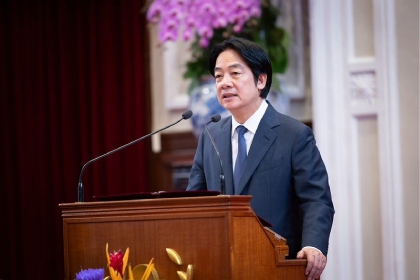
Taiwan strengthens cooperation with industries to achieve 2050 net-zero target
The president highlighted the establishment of the National Climate Change Countermeasures Committee under the Presidential Office, which brings together government representatives, industry and other stakeholders to develop solutions for Taiwan's net-zero transition.
He also emphasized the importance of cooperation across industrial supply chains, particularly in supporting small and medium-sized enterprises in reducing emissions and improving energy efficiency. The 65 companies recognized at this year's environmental awards collectively saved 1.613 billion kWh of electricity in the previous year, while their renewable energy consumption increased by 131 percent.
Taiwanese manufacturers advance emissions reduction and resource efficiency
Among the examples highlighted by the president, Yamaha Motors Taiwan has fully transitioned to recyclable steel boxes for export packaging and worked with 85 suppliers to reduce carbon emissions. Lai stated that the government would continue supporting industrial decarbonization through regulatory measures and cooperation with businesses, aiming to strengthen Taiwan's position in international markets.
Although the government confirmed that preparations for the proposed CBAM and ETS are underway, no specific implementation timeline or detailed regulatory framework was announced. The proposed measures form part of Taiwan's broader efforts to support industrial decarbonization and achieve its 2050 net-zero emissions target.