Egypt has established a permanent committee to monitor steel billet availability and prices, as the government seeks to address feedstock procurement challenges facing rerollers and maintain stable domestic production, according to a joint statement from the Ministry of Industry and the Ministry of Investment and Foreign Trade.
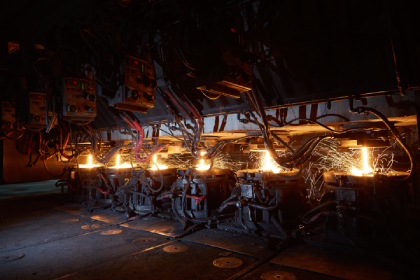
The announcement followed two meetings held by industry minister Khaled Hashem and investment and foreign trade minister Mohamed Farid with rerollers and integrated and semi-integrated steel producers, focusing on billet supply requirements, production and sales conditions, and coordination across the industry.
Committee to monitor supply and assess safeguard impact
The committee comprises representatives of the industry, investment and foreign trade, and supply ministries, alongside the Egyptian Competition Authority, and will assess billet availability at competitive prices while supporting uninterrupted supply chains.
Companies have been asked to provide the data and documentation needed to evaluate market conditions and the impact of existing measures. Farid said complaints would be examined against company records and findings from on-site verification visits, with particular attention to ensuring that factories can obtain the quantities, grades and technical specifications required to operate within their licensed capacities.
The discussions form part of the follow-up to Decision No. 121 of 2026, which introduced definitive safeguard measures on billet imports. Officials emphasized the need to balance the interests of integrated producers and rerollers, protect existing investments and sustain domestic production.
New production licences aim to reduce import dependence
Hashem said the ministry has offered new billet production licences with flexible pricing and payment terms to encourage rerollers to invest in melting facilities, increase domestic capacity and reduce reliance on imports, urging licence holders to accelerate project implementation.
The ministers also highlighted external challenges facing the sector, including the European Union's consideration of restrictions on scrap exports, while reaffirming their commitment to securing production inputs and strengthening the competitiveness of Egypt's steel industry.