The US-based Institute for Energy Economics and Financial Analysis (IEEFA) has stated that South Australia risks losing its early leadership position in low-emissions iron and steel production after shifting policy support from green hydrogen toward natural gas.
Less than two years after launching its Green Iron and Steel Strategy, the state government signed a 10-year agreement with Australia-based oil and gas company Santos covering the supply of 200 petajoules of gas, as SteelOrbis reported previously. The fuel will primarily support the transition of the Whyalla steelworks from coal-based blast furnace production to direct reduced iron (DRI) technology.
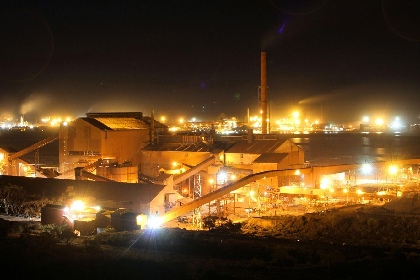
Gas-based DRI seen as transitional rather than green solution
While gas-based DRI generates lower emissions compared to traditional coal-based steelmaking, IEEFA emphasized that the process remains carbon-intensive and cannot deliver fully green steel production.
The agreement follows the cancellation of South Australia’s planned green hydrogen project, which had originally been intended to supply the Whyalla facility. Government indications that natural gas will dominate the plant’s future energy mix point to a strategic shift away from earlier plans to transition toward hydrogen-based steelmaking.
Global momentum increasingly favors hydrogen-based steelmaking
According to the IEEFA analysis, prioritizing gas risks misreading global technological trends. Although hydrogen deployment timelines have slowed in some regions, hydrogen-based DRI is increasingly emerging as the global benchmark for low-carbon steel production.
Competing regions including Oman, Europe and China are advancing hydrogen-ready steel projects designed to operate with hydrogen from the outset. Projects such as Sweden’s Stegra initiative and publicly supported European DRI investments demonstrate growing market acceptance, including customer willingness to pay premiums for genuinely low-carbon steel products, advantages unlikely to extend to gas-based production routes.
Renewable energy advantage may be undermined
IEEFA noted that South Australia’s long-term competitive strength lies in abundant renewable energy resources rather than natural gas availability. While gas-supported DRI may help stabilize operations and safeguard employment at Whyalla in the near term, the report concluded that retreating from hydrogen leadership could weaken the region’s future position as global steel markets increasingly favor fully decarbonized production pathways.