German Steel Recycling Association, the German Association of Secondary Raw Materials and Waste Management and the German Association of Metal Traders and Recyclers have issued a strong warning to the European Commission, urging Brussels to abandon plans for steel and metal scrap export restrictions. In a joint letter accompanied by a detailed legal and economic assessment, the associations said such measures would severely disrupt well-functioning recycling markets and undermine Europe’s climate, circular economy and industrial competitiveness objectives.
The associations expressed deep concern over policy signals emerging from the Waste Shipment Regulation, the Critical Raw Materials Act and the EU Steel and Metals Action Plan, arguing that these initiatives collectively point toward de facto export bans.
According to German Steel Recycling Association managing director Guido Lipinski, policymakers are “creating the illusion” that challenges in the primary steel sector can be solved by restricting recycling sector exports, despite there being no shortage of scrap in the EU. He said such restrictions aim to depress prices artificially and would damage thousands of mid-sized companies while dismantling an established circular economy that has operated efficiently for decades.
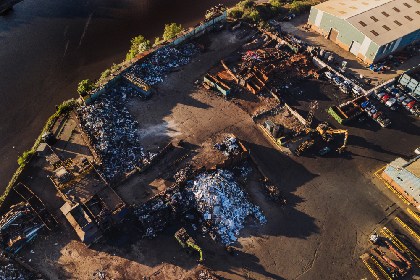
Recycling sector essential to Europe’s decarbonisation strategy
The associations stressed that steel and metal recyclers are already critical contributors to Europe’s climate transition. Today, 59 percent of EU steel production is based on recycled scrap. In Germany, the recycling industry comprises thousands of companies and tens of thousands of employees.
Secondary raw materials significantly reduce energy use and emissions compared to primary production while strengthening Europe’s resource independence.
German Association of Secondary Raw Materials and Waste Management managing director Eric Rehbock warned that the planned restrictions send the wrong investment signal, placing modern processing and sorting technologies at risk. “Markets could be shut down politically at any time,” he said.
Export restrictions counterproductive and protectionist
The associations stressed that export restrictions should not be misused as a simplistic solution to the competitiveness challenges of specific industries. Instead, they called for stable, investment-friendly framework conditions that support additional recycling capacity, higher-quality secondary raw materials and technological innovation supporting green steel production.
“Protectionism benefits neither the climate nor Europe’s industrial base,” German Association of Metal Traders and Recyclers managing director Ralf Schmitz stated. He warned that isolating Europe from global scrap markets would undermine recyclers’ competitiveness and could ultimately increase Europe’s dependency rather than reduce it.
High economic and legal risks
An expert assessment shared with the Commission outlined significant risks linked to potential export restrictions. These include distortions of competition disadvantaging European recyclers, reduced private investment in processing and capacity expansion and long-term threats to the availability of high-quality secondary raw materials for EU steel and metals producers. The report concluded that the policy direction contradicts long-standing EU competition and trade principles.
The associations urged the European Commission to reconsider any move toward export bans or restrictive measures and instead adopt a coherent policy approach that aligns competition policy, climate goals and circular economy principles. They argued that Europe’s recycling industry must be recognized as a key part of the solution, enabling the expansion of green steel and reducing industrial emissions, not as a problem requiring containment.